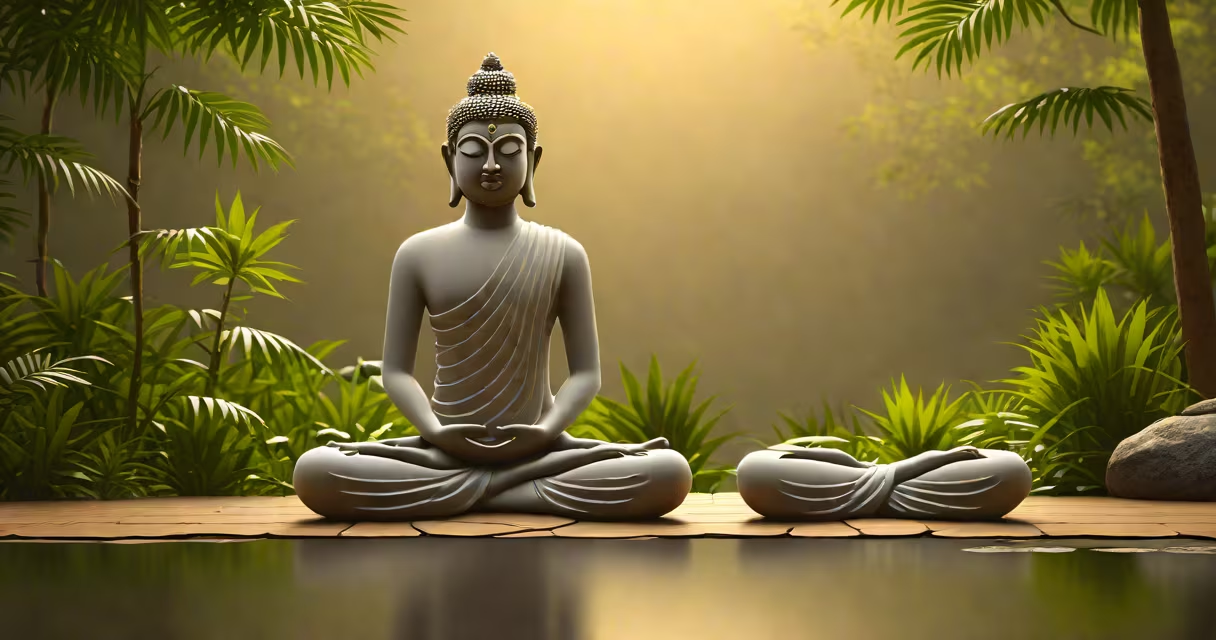
The Sanskrit word for peace is shanti, meaning profound inner tranquility and harmony. This term extends beyond mere absence of conflict, encompassing spiritual calm and balance.
Shanti derives from the root sham, meaning "to calm" or "to pacify." It appears in Hindu rituals, Buddhist teachings, and yoga practices as a mantra for invoking peace. The most common form is "Om Shanti," where "Om" represents universal energy.
Sanskrit distinguishes three levels of shanti:
For example, the Gayatri Mantra includes shanti to invoke peace at all levels.
In daily life, shanti appears in:
Unlike Western concepts of peace, shanti emphasizes inner stillness over external conditions. A 2018 study in Journal of Religion and Health found that chanting shanti mantras reduced stress markers by 23%.
Many confuse shanti with passive quietude. However, it requires active cultivation through meditation and ethical living. For instance, the Bhagavad Gita teaches that shanti arises from selfless action (karma yoga).
I first experienced shanti's power during a silent retreat in Rishikesh. Chanting "Om Shanti" daily shifted my focus from external chaos to internal equilibrium.
| Concept | Origin | Focus |
|---|---|---|
| Shanti | Sanskrit | Inner spiritual calm |
| Pax | Latin | External political peace |
| Salam | Arabic | Greeting and safety |
While Latin "pax" denotes absence of war, shanti signifies harmony within oneself and the universe. The one-word sentence "Shanti" serves as both greeting and blessing in India.
To integrate shanti into daily life:
For example, the Art of Living Foundation teaches shanti through breathwork (Sudarshan Kriya).