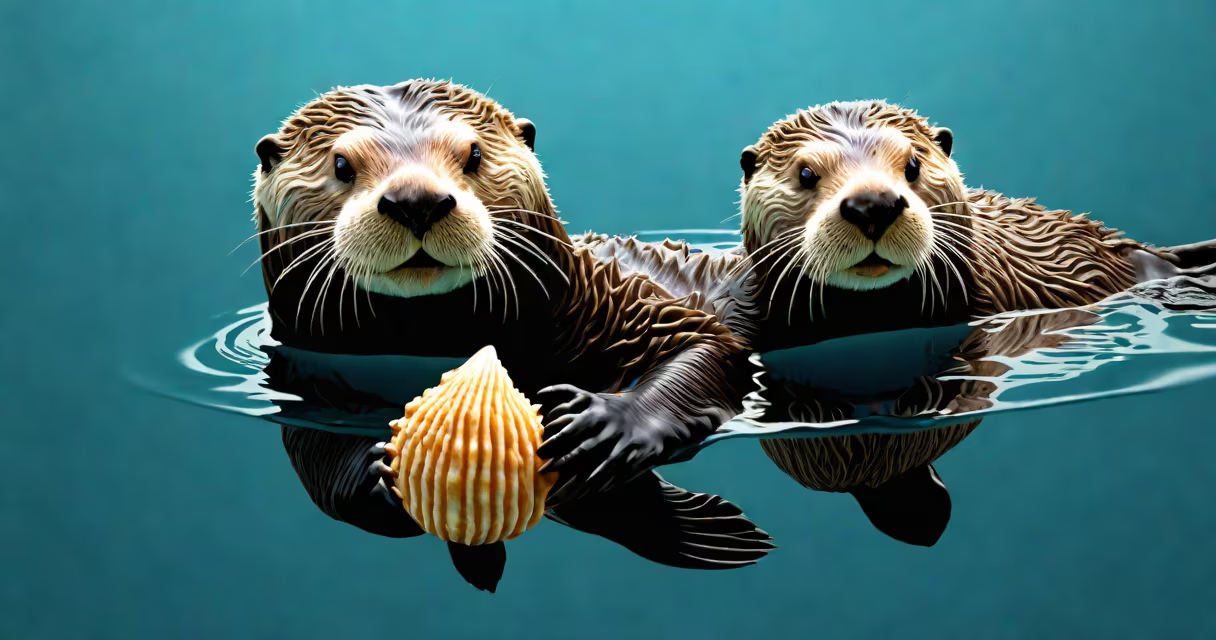
A sea otter is a small, playful marine mammal known for its cute appearance and fun behaviors, like floating on its back while eating.
Unlike other otters, sea otters live entirely in the ocean. They have thick fur to stay warm in cold water and often hold hands when they sleep to keep from drifting apart.
There are three subspecies of sea otters, all found along the Pacific coast of North America. The northern sea otter lives near Alaska, the southern sea otter is found in California, and the northernmost subspecies inhabits the Aleutian Islands.
Sea otters prefer coastal areas with kelp forests, which provide food and shelter. Kelp forests are like underwater gardens where sea otters can find crabs, clams, and other food. They play a important role in keeping these ecosystems healthy by controlling sea urchin populations.
Sea otters are known for their playful behavior. They often float on their backs, using their chests as tables to eat food. They also crack open shells by hitting them with rocks, a skill they teach their pups. Another fun fact: sea otters have a special pouch in their cheek to store food.
One time, I watched a sea otter at an aquarium use a rock to crack open a clam. It was amazing to see how clever and patient the otter was!
Many people think sea otters are the same as river otters, but sea otters are much smaller and live only in the ocean. River otters have smoother fur and are found in freshwater environments.
Another myth is that sea otters are always alone. In reality, they often gather in groups called rafts, which can include dozens or even hundreds of otters.
Sea otters were once hunted for their fur, which nearly led to their extinction. Today, they are protected, but their populations are still at risk due to pollution and oil spills. Conservation efforts are helping to ensure their survival.
According to the International Union for Conservation of Nature (IUCN), sea otters are listed as endangered. Organizations like the Monterey Bay Aquarium work to protect and rehabilitate injured sea otters.