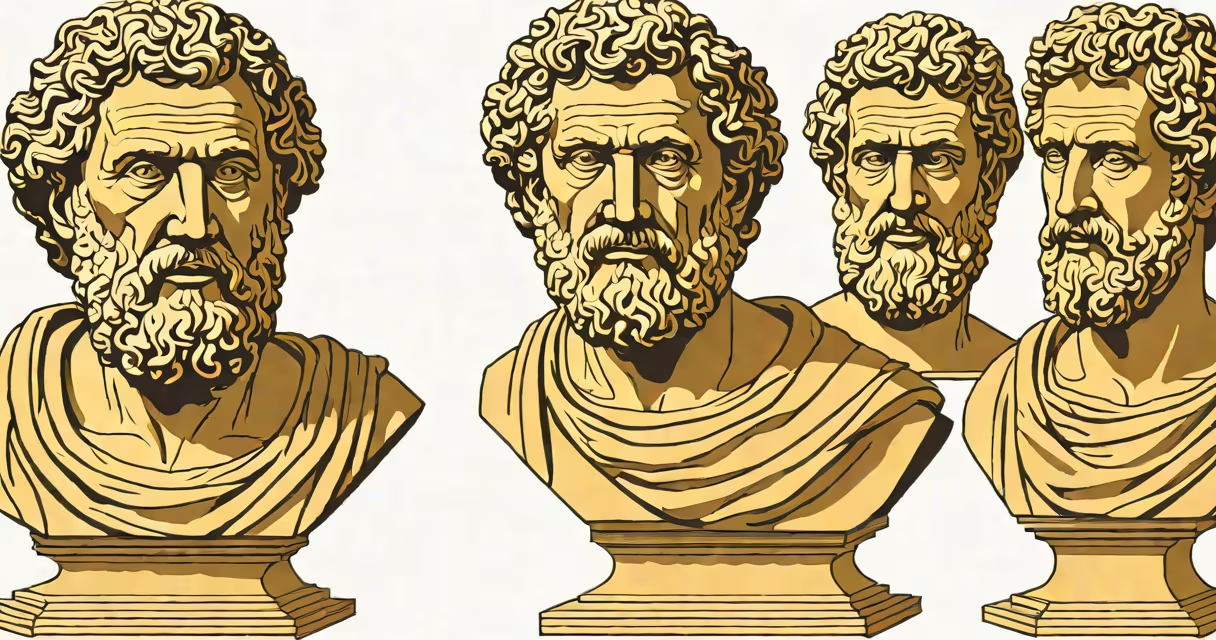
Seneca, Marcus Aurelius, and Epictetus were Rome's most influential Stoic philosophers, shaping timeless wisdom on resilience and virtue. Their writings form the core of Stoic philosophy, which teaches self-control, rationality, and endurance.
These three figures emerged from different walks of life but shared a commitment to Stoic principles. Seneca was a statesman and playwright, Marcus Aurelius an emperor, and Epictetus a former slave turned philosopher. Together, they created a structure for living virtuously amid chaos.
Stoicism is a philosophy that emphasizes logic, self-discipline, and acceptance of what one cannot control. The core idea is that external events are beyond our control, but our reactions to them are not. By focusing on inner virtue and reason, individuals can achieve tranquility.
| Philosopher | Key Contribution | Famous Work |
|---|---|---|
| Seneca | Emphasis on emotional control and practical ethics | Letters from a Stoic |
| Marcus Aurelius | Reflections on leadership and personal conduct | Meditations |
| Epictetus | Focus on personal freedom through mental discipline | Discourses |
Stoicism is applied in modern psychology, self-help, and leadership training. Its principles help individuals manage stress, build resilience, and make rational decisions. For example, cognitive-behavioral therapy (CBT) borrows from Stoic techniques to reframe negative thoughts.
Many assume Stoicism is about suppressing emotions entirely. However, it's about managing them effectively. Seneca wrote extensively on the importance of understanding and moderating emotions rather than eliminating them. Marcus Aurelius also emphasized the role of emotions in guiding virtuous behavior.
Imagine facing a stressful work deadline. A Stoic approach would involve accepting the pressure as an external event beyond your control, then focusing on how you respond-breaking the task into manageable steps, maintaining a calm demeanor, and prioritizing logical solutions over emotional reactions.
I once used Stoic principles during a high-pressure project. By focusing on what I could control-my effort, attitude, and preparation-I reduced anxiety and improved performance. This practical application of Stoicism proved its effectiveness in real-world situations.