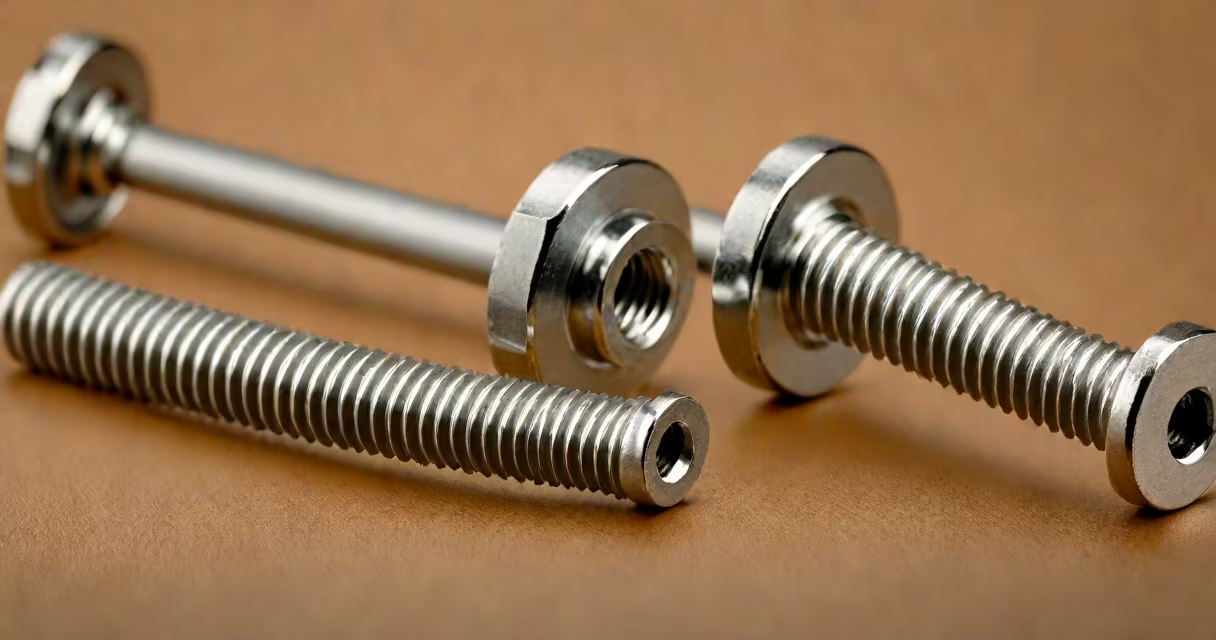
Socket head screws are cylindrical fasteners with a recessed hexagonal socket in the head, designed for precise torque application using an Allen wrench.
The recessed hexagonal socket allows for high torque transmission without damaging the screw head. This design prevents slippage during tightening, making it ideal for applications requiring precision and strength.
When you insert an Allen wrench into the socket and apply force, the torque is distributed evenly across the six points of contact. This ensures the screw tightens securely without stripping the head.
| Type | Characteristics | Common Uses |
|---|---|---|
| Standard Socket Head Cap Screw | Cylindrical body with a hexagonal socket | General machinery, automotive components |
| Button Head Socket Screw | Flat top with a rounded edge | Applications needing a flush surface |
| Flat Head Socket Screw | Low-profile head for countersunk installation | Woodworking, thin metal assemblies |
Socket head screws are common in machinery, automotive parts, and aerospace applications due to their high torque capacity and resistance to slipping. Their low-profile design makes them suitable for tight spaces.
Many people confuse socket head screws with hex head bolts. While both have hexagonal features, socket head screws have a recessed socket, whereas hex head bolts have an external hexagon.
Another misconception is that socket head screws are only for high-torque applications. While they excel in such scenarios, they are also used in low-torque applications where precision and a low-profile design are required.
I once used socket head screws to assemble a custom workbench. The recessed sockets allowed me to tighten the screws securely without stripping the heads, ensuring the bench remained sturdy under heavy loads. The low-profile design also gave the bench a clean, finished look.