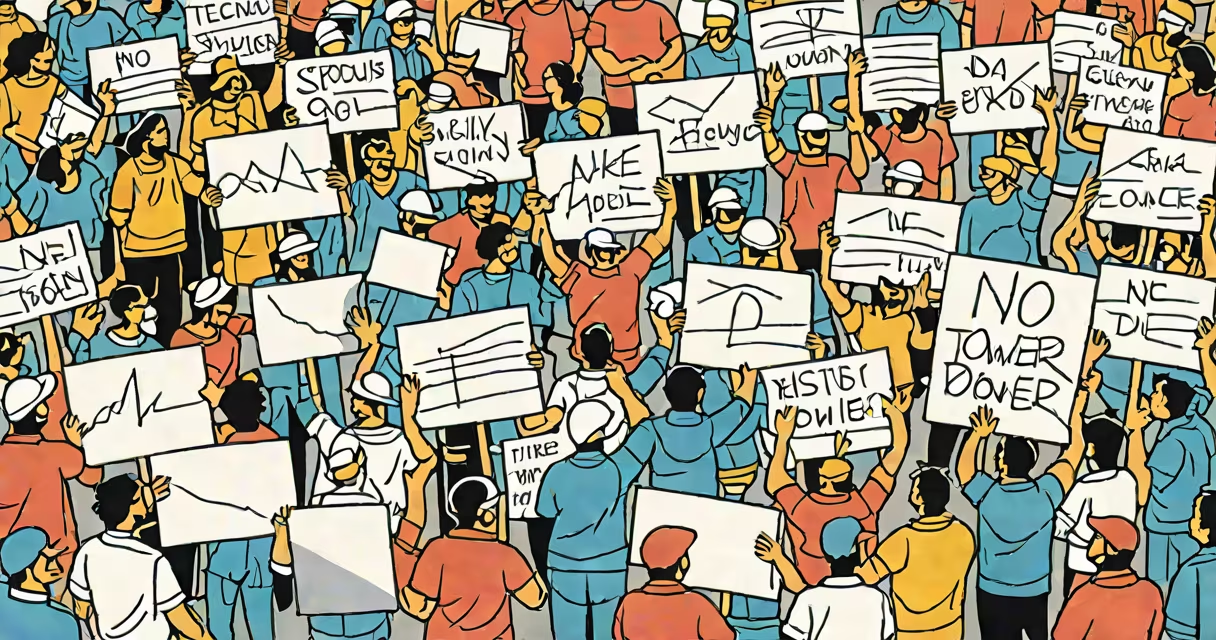
Speaking truth to power means openly challenging those in authority when they abuse their power or act unjustly. This phrase describes a courageous act of dissent where individuals or groups confront useful institutions, leaders, or systems to expose wrongdoing.
This concept operates on the principle that truth has power and that even the most entrenched systems of authority can be held accountable through persistent, principled opposition. It requires courage, as speakers often face retaliation or marginalization for their actions.
The phrase appears in various contexts, including:
This practice occurs worldwide whenever power imbalances exist. It serves as a check on authority, promoting transparency and accountability. For example, during the Civil Rights Movement, activists like Martin Luther King Jr. spoke truth to power by exposing racial injustices.
Many assume speaking truth to power always leads to immediate change. However, its primary purpose is to expose truth, not guarantee outcomes. For instance, Edward Snowden's revelations about government surveillance shifted public awareness but didn't end the practices.
Another misconception is that it requires grand gestures. Often, it involves everyday actions like teachers advocating for students or employees reporting unethical practices.
I witnessed this firsthand when covering a local school board meeting where parents challenged a proposed policy that would have harmed special education programs. Their persistent, fact-based arguments led to policy changes.
| Year | Event | Outcome |
|---|---|---|
| 1963 | Martin Luther King Jr.'s "Letter from Birmingham Jail" | Galvanized the Civil Rights Movement |
| 1971 | The Pentagon Papers revealed by Daniel Ellsberg | Exposed U.S. government deception about the Vietnam War |
| 2013 | Edward Snowden's NSA leaks | Increased global awareness of mass surveillance |
These examples show that while outcomes vary, the act of speaking truth to power consistently exposes injustices and shifts public discourse.
Speaking truth to power remains a important tool for maintaining democratic principles and holding those in authority accountable. It reminds us that truth, when spoken boldly and persistently, can challenge even the most entrenched systems of power.