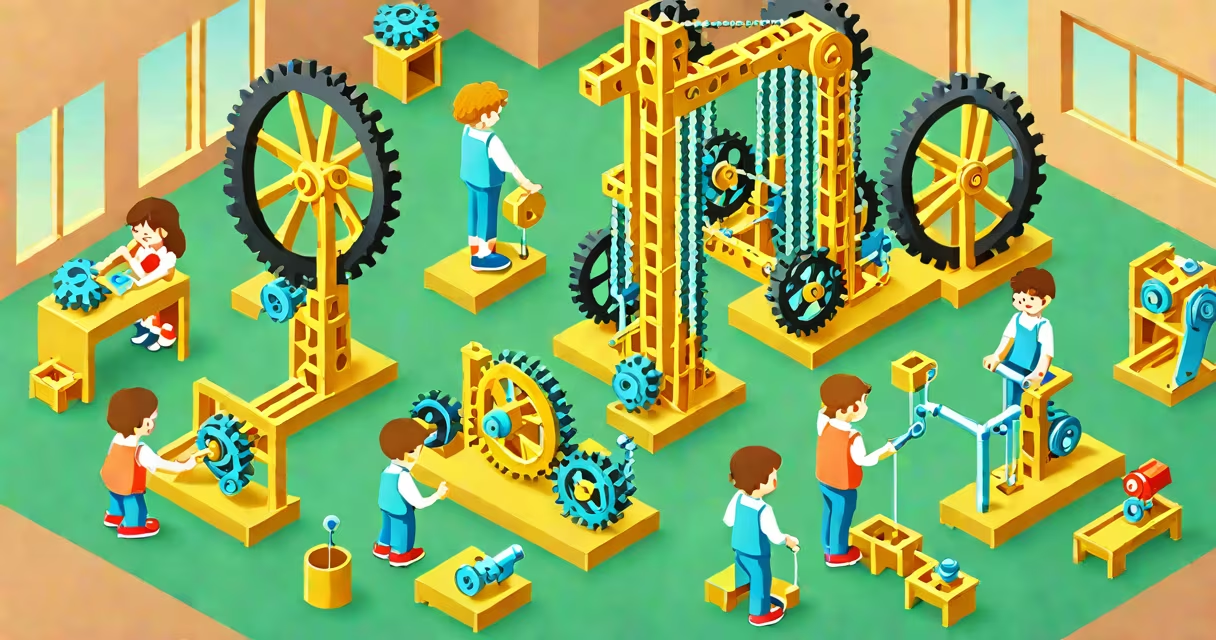
STEM for elementary students is an educational approach that integrates science, technology, engineering, and math into engaging, hands-on activities designed for young learners. It fosters critical thinking, problem-solving, and creativity through age-appropriate projects.
STEM education for elementary students breaks down complex concepts into simple, interactive lessons. For example, a teacher might use building blocks to demonstrate basic engineering principles or a simple baking soda volcano to explain chemical reactions. These activities make abstract ideas tangible and fun.
The four core disciplines of STEM-science, technology, engineering, and math-are taught in an interconnected way. Here's how they typically appear in elementary classrooms:
| Component | Example Activity |
|---|---|
| Science | Observing plant growth or experimenting with magnets |
| Technology | Using simple coding apps or building circuits with snap-together components |
| Engineering | Designing a bridge from popsicle sticks or creating a simple machine |
| Math | Counting objects, measuring ingredients, or solving puzzles |
Elementary school is a important time for developing foundational skills. STEM activities help children build confidence, curiosity, and a love for learning. According to the National Research Council, early exposure to STEM concepts can lead to long-term interest in these fields. For instance, a child who enjoys building structures with blocks may develop an interest in architecture or engineering later in life.
STEM education also promotes collaboration. Group projects encourage students to work together, share ideas, and communicate effectively-skills that are valuable in any career. A common misconception is that STEM is only for advanced students. In reality, STEM activities can be adapted for all skill levels, making them accessible to every child.
Imagine a typical morning in an elementary STEM classroom. The teacher introduces a problem, such as "How can we protect a small toy from a fall?" Students brainstorm solutions, design prototypes using materials like cardboard and tape, and test their designs by dropping them from different heights. This process teaches problem-solving, iteration, and resilience-key skills for future innovators.
Some parents and educators believe STEM is too complex for young children. However, STEM activities are designed to be age-appropriate and engaging. For example, a simple activity like sorting shapes by color or size introduces basic mathematical concepts. Another misconception is that STEM is only about rote memorization. In reality, STEM encourages exploration and creativity.
STEM education is not limited to formal classrooms. Parents can also introduce STEM concepts at home through everyday activities, such as cooking (math and chemistry), building with Legos (engineering), or stargazing (science). These activities reinforce learning in a natural and enjoyable way.
STEM for elementary students provides a foundation for lifelong learning and curiosity. By integrating science, technology, engineering, and math into fun, hands-on activities, young learners develop essential skills that will serve them well in any career path. Whether in the classroom or at home, STEM education offers endless opportunities for exploration and discovery.