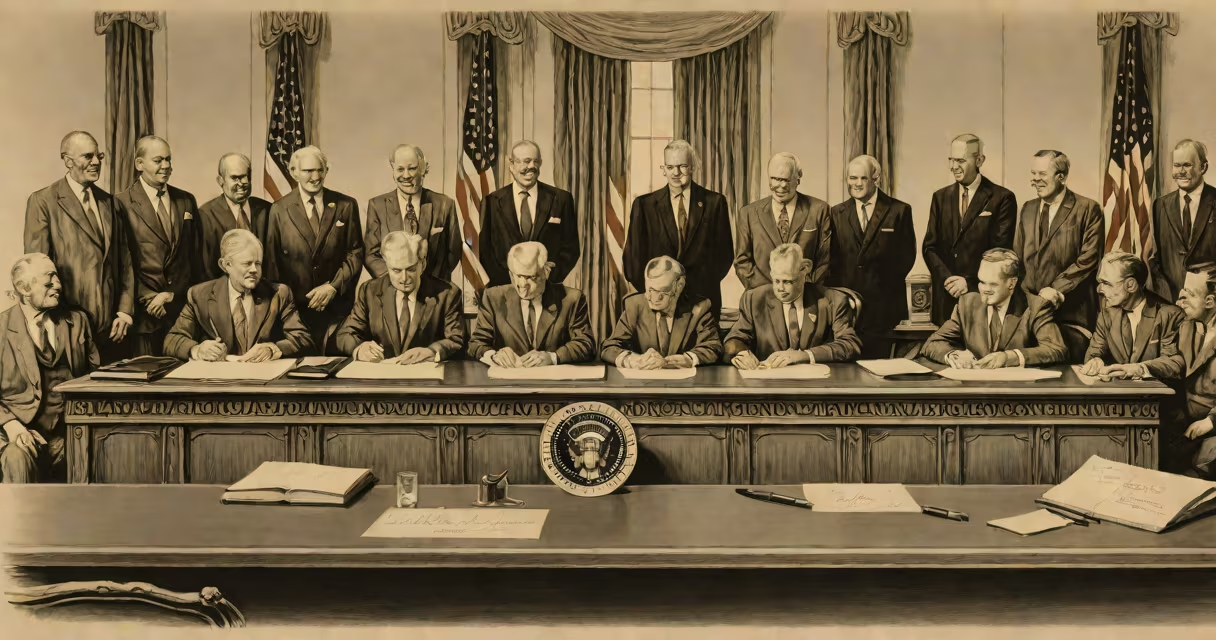
The 23rd Amendment to the U.S. Constitution grants residents of Washington D.C. the right to vote in presidential elections by allocating them electoral votes equal to those of the least populous state.
Ratified in 1961, this amendment was a direct response to the lack of voting representation for D.C. residents in federal elections. The amendment allows the district to appoint presidential electors equal in number to the whole number of senators and representatives in Congress to which the District would be entitled if it were a state.
The amendment effectively gives Washington D.C. a voice in presidential elections, even though it is not a state. The district is allocated three electoral votes, matching the smallest states like Wyoming and Vermont. These electors participate in the Electoral College process just like those from the 50 states.
For example, in the 2020 presidential election, Washington D.C. cast its three electoral votes for Joe Biden, contributing to his electoral vote count. This participation helps the approximately 700,000 residents of D.C. have a say in choosing the president, even though they do not have representation in Congress.
The amendment consists of two sections:
Before the 23rd Amendment, residents of Washington D.C. had no representation in presidential elections. As the capital of the United States, D.C. is not a state and therefore did not have any electoral votes. This disparity was seen as a significant democratic deficit, as residents of the district pay federal taxes but had no say in electing the president.
The amendment was a direct response to this inequality. According to the National Archives, the amendment was proposed by Congress in 1960 and ratified by the states in 1961. It was a significant step towards ensuring that all U.S. citizens, regardless of where they live, have a voice in the electoral process.
One common misconception is that the 23rd Amendment gives Washington D.C. more power than other jurisdictions. In reality, it merely helps D.C. residents have the same right to vote in presidential elections as residents of the 50 states. Another misconception is that the amendment grants D.C. representation in Congress, which it does not.
In practice, the 23rd Amendment has had a significant impact on presidential elections. For instance, in close elections, the three electoral votes from D.C. can be decisive. This was particularly evident in the 2000 presidential election, where the outcome hinged on a few electoral votes, including those from D.C.
As a content strategist, I've noticed that many resources oversimplify the 23rd Amendment, focusing solely on the electoral votes without discussing the broader implications of representation and democracy. Understanding the full context and impact of this amendment is important for a complete grasp of U.S. electoral history and the ongoing debate about D.C. statehood.
The 23rd Amendment is a critical part of the U.S. Constitution that ensures residents of Washington D.C. have a voice in presidential elections. By allocating electoral votes to the district, the amendment addresses a historical democratic deficit and helps all U.S. citizens, regardless of their location, have the right to participate in the electoral process.