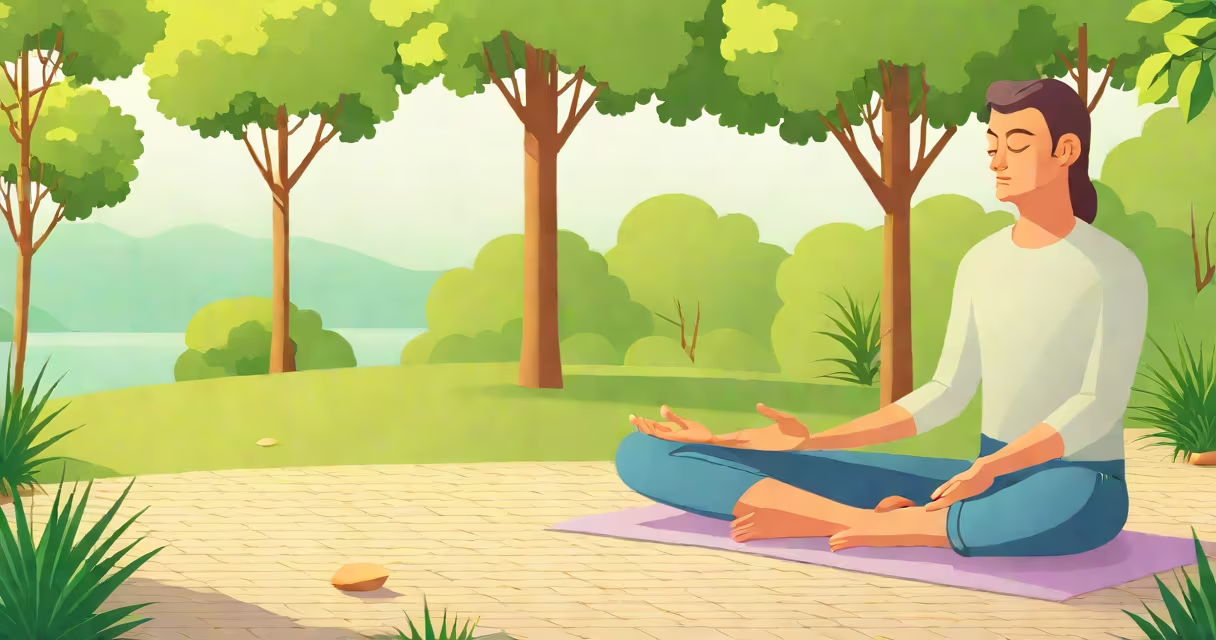
The art of meditation is a practice of focused attention and mindfulness designed to cultivate awareness, relaxation, and emotional balance. It involves training the mind to achieve a state of calm and clarity through various techniques.
Meditation works by redirecting your thoughts away from everyday distractions and stressors. By focusing on a single point-such as the breath, a mantra, or an object-you train your brain to stay present. This process reduces the activity of the default mode network, a part of the brain associated with mind-wandering and self-referential thoughts, according to research published in Nature Reviews Neuroscience.
There are several types of meditation, each with unique methods and goals:
| Type | Description | Common Use |
|---|---|---|
| Mindfulness Meditation | A practice of paying attention to the present moment without judgment. | Reducing stress and anxiety |
| Loving-Kindness Meditation | Focuses on developing feelings of compassion and love toward oneself and others. | Enhancing emotional well-being |
| Body Scan Meditation | Involves mentally scanning your body to get in touch with individual parts and sensations. | Relieving physical tension |
| Breath Awareness Meditation | Concentrates on the breath as it flows in and out of the body. | Improving focus and concentration |
Meditation is practiced worldwide in various settings, including homes, workplaces, and spiritual retreats. It is used for stress reduction, improving mental health, enhancing focus, and fostering a sense of inner peace. Many people incorporate meditation into their daily routines to manage anxiety and depression, while others use it to improve sleep quality and well-being.
One common misconception is that meditation requires complete silence and stillness. While these conditions can improve the practice, meditation can be done anywhere, even in noisy environments. Another myth is that meditation clears the mind entirely. In reality, it teaches you to observe thoughts without getting caught up in them.
Many people also believe that meditation is solely a spiritual practice. However, meditation is a secular activity that can be adapted to fit personal beliefs and goals. For example, someone might meditate to improve athletic performance or to improve creativity, without any religious intent.
To begin practicing meditation, find a quiet place where you won't be disturbed. Sit comfortably with your back straight, either on the floor or in a chair. Close your eyes and focus on your breath, noticing the sensation of air flowing in and out of your nostrils. When your mind wanders, gently bring your focus back to your breath. Start with just a few minutes each day and gradually increase the duration as you become more comfortable with the practice.
For a more structured approach, consider following guided meditations available online or through apps. These resources provide step-by-step instructions and can be particularly helpful for beginners. As you gain experience, you can explore different techniques and find what works best for you.