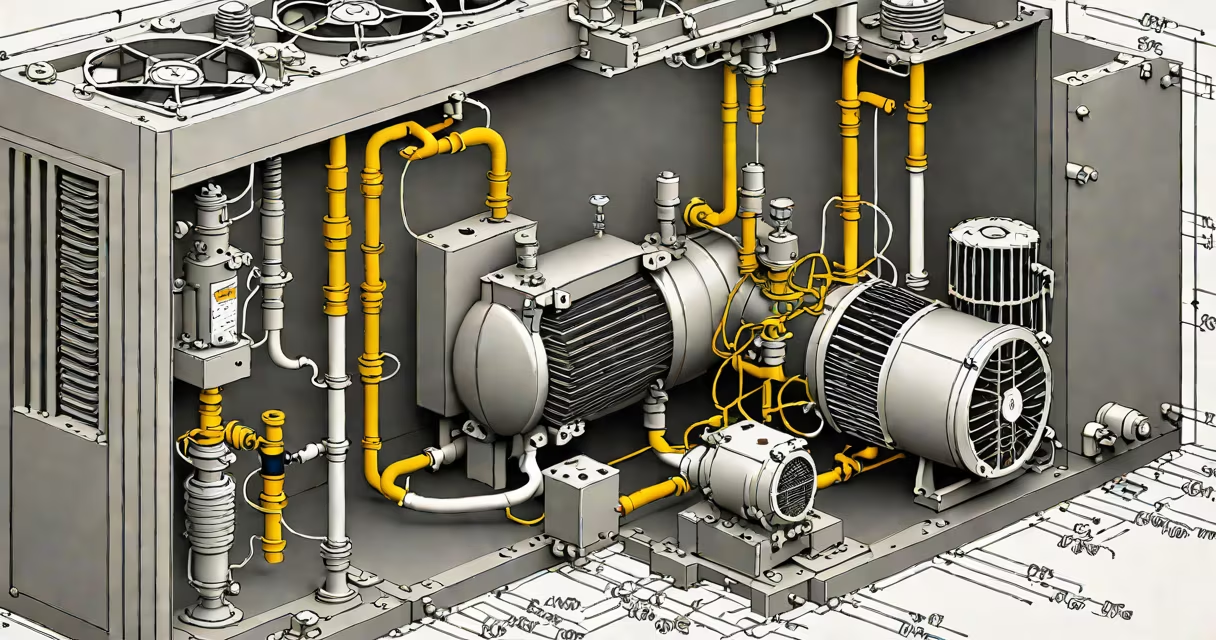
A **variable capacity compressor (VCD)** in HVAC is a type of compressor that adjusts its cooling output in small increments rather than operating at full capacity or shutting off completely. This allows air conditioning systems to maintain precise temperature control and improve energy efficiency.
Traditional HVAC compressors operate at full capacity or turn off entirely, leading to temperature swings and energy waste. VCDs, however, use inverter-driven technology to modulate their output between 25% and 125% of their rated capacity. This continuous adjustment ensures consistent comfort and reduces energy consumption by up to 60% compared to conventional systems.
| Type | Key Features | Common Applications |
|---|---|---|
| Scroll Compressors | Use orbiting scrolls to compress refrigerant smoothly. Known for reliability and quiet operation. | Residential and light commercial HVAC systems. |
| Rotary Compressors | Employ a rotating mechanism for efficient compression. Often paired with inverter technology. | Small to medium-sized HVAC units. |
| Screw Compressors | Use intermeshing screws to compress refrigerant. High capacity and efficiency. | Large commercial and industrial applications. |
VCDs are primarily used to improve energy efficiency and comfort. By adjusting their output in small increments, they eliminate the on-off cycling of traditional compressors, which can cause temperature fluctuations and wear on system components. This results in lower energy bills and extended equipment lifespan.
For example, a home equipped with a VCD-based HVAC system can maintain a steady temperature of 72°F (22°C) without the frequent on-off cycling of a conventional system, which might fluctuate between 68°F (20°C) and 76°F (24°C).
One common misconception is that VCDs are only beneficial in extreme climates. While they excel in hot and humid conditions, they also improve efficiency in moderate climates by reducing energy waste during partial-load operation. Another myth is that VCDs are more expensive to install. While the initial cost may be higher, the long-term energy savings often offset this expense within a few years.
I've seen firsthand how VCDs perform in different settings. During a summer heatwave, a residential HVAC system with a VCD maintained a consistent indoor temperature while using 30% less energy than a nearby home with a traditional system.
According to the U.S. Department of Energy, variable capacity compressors can reduce energy consumption by up to 60% in residential and commercial HVAC applications. This makes them a cost-effective solution for both new installations and retrofits.