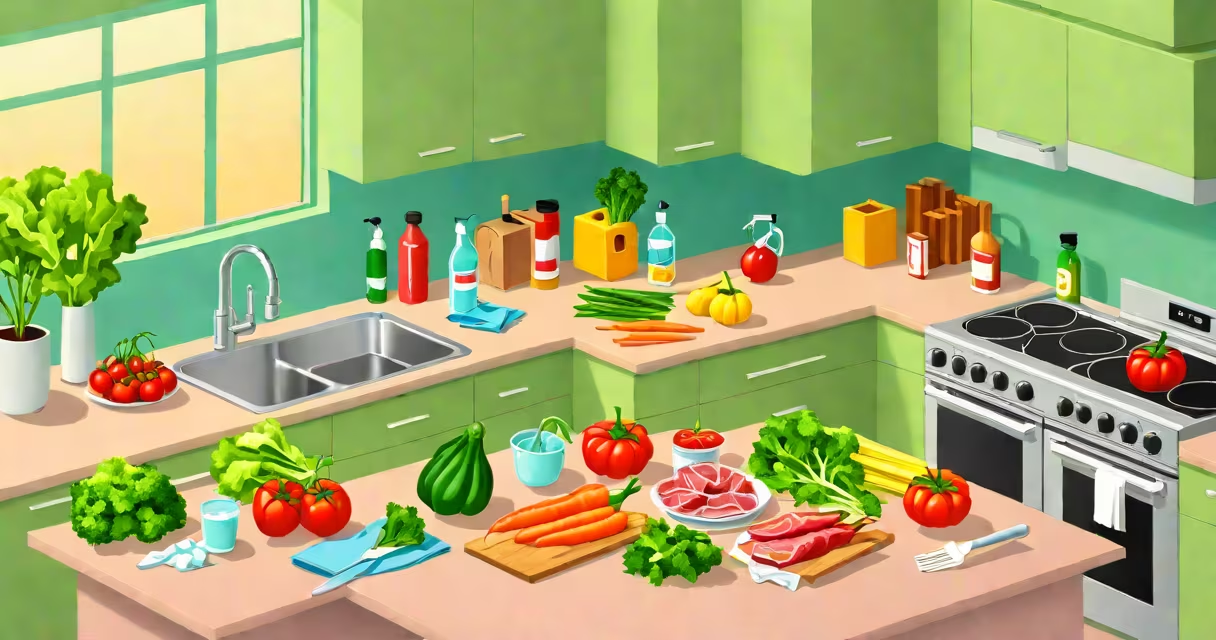
Food poisoning occurs when consuming contaminated food, leading to symptoms like nausea, vomiting, and diarrhea. Preventing it requires understanding how bacteria spread and implementing strict food safety practices.
Foodborne illnesses result from harmful bacteria, viruses, or parasites contaminating food. Common culprits include Salmonella, E. coli, and Norovirus. These pathogens multiply quickly in warm, moist environments, such as raw meat left at room temperature. Cross-contamination-when bacteria transfer from one surface or food to another-also plays a significant role.
The Centers for Disease Control and Prevention (CDC) identifies five primary causes of food poisoning:
Preventing food poisoning starts with proper food handling. The U.S. Department of Agriculture (USDA) recommends the following steps:
For example, storing raw chicken in a sealed container on the bottom shelf of the refrigerator prevents juices from dripping onto other foods.
Many people unknowingly engage in practices that increase their risk of food poisoning. One mistake is thawing frozen meat on the counter. Instead, thaw food in the refrigerator, in cold water, or in the microwave. Another error is washing raw poultry, which spreads bacteria through water droplets. The USDA advises against this practice.
I once prepared a Thanksgiving meal for 15 people. By following the USDA's guidelines-cleaning surfaces, separating raw turkey from vegetables, cooking to the correct temperature, and refrigerating leftovers promptly-I ensured everyone stayed healthy and enjoyed the feast.