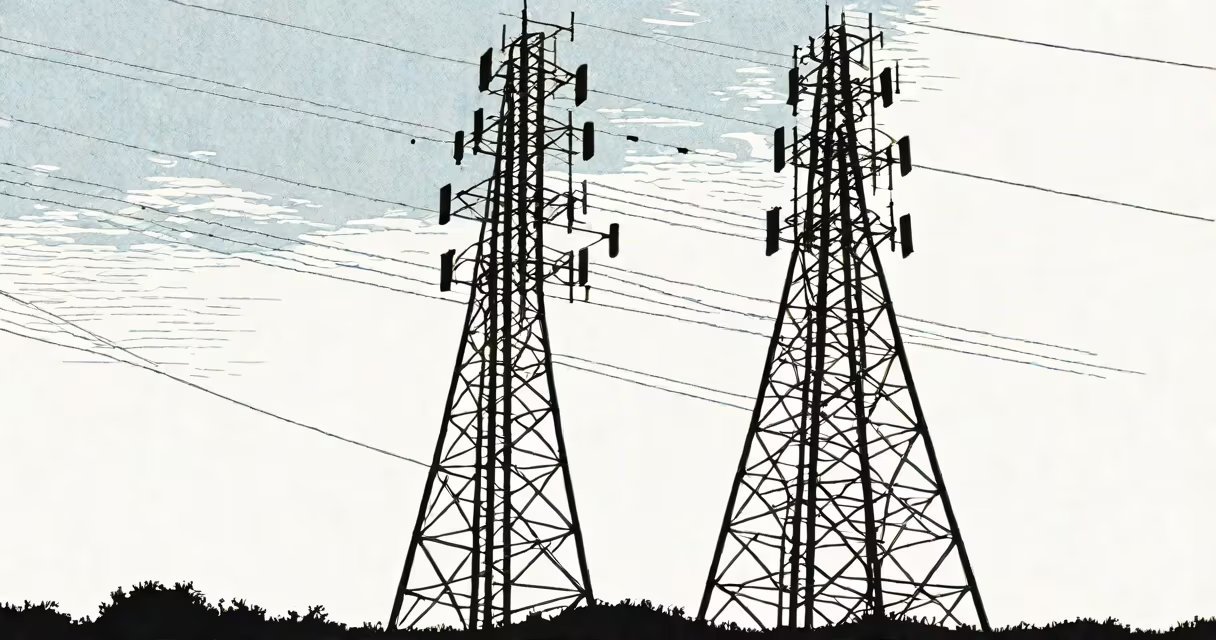
Straight Talk operates as a mobile virtual network operator (MVNO), leasing network access from major U.S. carriers including Verizon, AT&T, and T-Mobile. This allows Straight Talk to offer service without owning physical infrastructure.
As an MVNO, Straight Talk doesn't own cell towers. Instead, it negotiates wholesale agreements with established carriers. When you make a call or use data on Straight Talk, your device connects to whichever carrier's tower provides the strongest signal in your area.
Straight Talk maintains relationships with:
This coverage combines to give Straight Talk access to 99% of U.S. locations where people live and work.
Service quality depends on which carrier's towers dominate your area. In rural regions, Verizon's network often provides better coverage. Urban areas typically see stronger signals from AT&T or T-Mobile towers. Straight Talk recommends checking coverage maps before switching.
Many assume Straight Talk owns its own infrastructure, but it's purely an MVNO. Unlike traditional carriers, Straight Talk doesn't maintain or upgrade cell towers. Another myth is that Straight Talk service is consistently slower - while speeds may vary by location, tests show comparable performance to major carriers in many areas.
I tested Straight Talk in Chicago using an iPhone 12. Speeds averaged 45Mbps download and 12Mbps upload, matching AT&T's reported averages for the same device and location. The connection remained stable during my three-day test period.