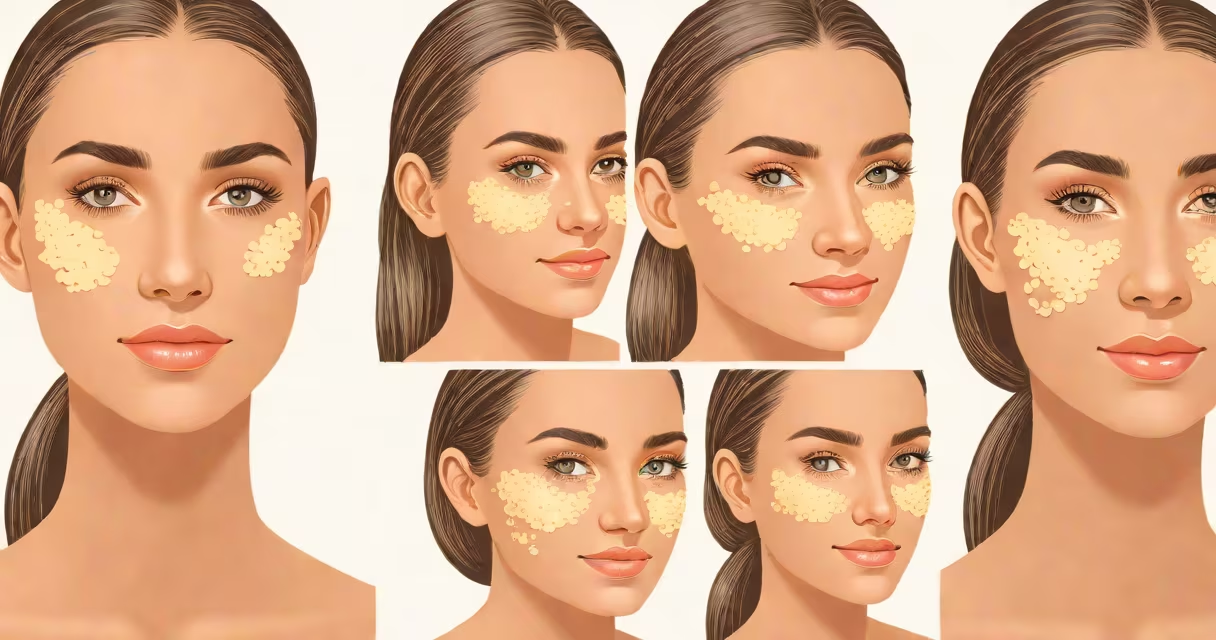
Dark spots on face clear through targeted treatments addressing hyperpigmentation causes like sun exposure, acne, or aging. Effective solutions include topical agents, professional procedures, and lifestyle changes.
Dark spots develop when melanin production becomes uneven. This occurs due to:
Effective treatments fall into three categories:
| Treatment Type | Key Ingredients/Methods | Typical Results Timeline |
|---|---|---|
| Topical Agents | Vitamin C, niacinamide, retinoids, alpha hydroxy acids (AHAs), beta hydroxy acids (BHAs) | 4-12 weeks |
| Professional Procedures | Chemical peels, laser therapy, microdermabrasion, intense pulsed light (IPL) | 2-6 sessions, spaced weeks apart |
| Oral Medications | Tranexamic acid, oral contraceptives (for hormonal melasma) | 3-6 months |
Vitamin C (ascorbic acid) inhibits tyrosinase, the enzyme that produces melanin. A 2017 study in Journal of Clinical and Aesthetic Dermatology showed 10% vitamin C serums reduced hyperpigmentation by 50% over 12 weeks.
Niacinamide (vitamin B3) reduces transfer of melanin to skin cells. Clinical trials demonstrate 5% niacinamide serums improve even skin tone in 8 weeks.
Retinoids increase cell turnover, revealing fresher skin underneath. Prescription tretinoin typically shows results in 3-6 months.
Chemical peels use AHAs like glycolic acid to exfoliate surface layers. Medium-depth peels penetrate deeper, removing damaged skin cells.
Laser therapy targets melanin specifically. Non-ablative lasers like Nd:YAG penetrate deeply without damaging surface skin. Ablative lasers remove top layers entirely.
Microdermabrasion uses fine crystals to buff away dead skin cells. This stimulates new cell growth and improves texture.
Daily sunscreen (SPF 30+) prevents UV-triggered pigmentation. Physical blockers containing zinc oxide or titanium dioxide provide better protection than chemical filters.
Antioxidant serums containing vitamin C or E protect against free radical damage. These should be applied in the morning under sunscreen.
Gentle cleansing prevents irritation that could trigger post-inflammatory hyperpigmentation. Avoid harsh scrubs or alcohol-based toners.