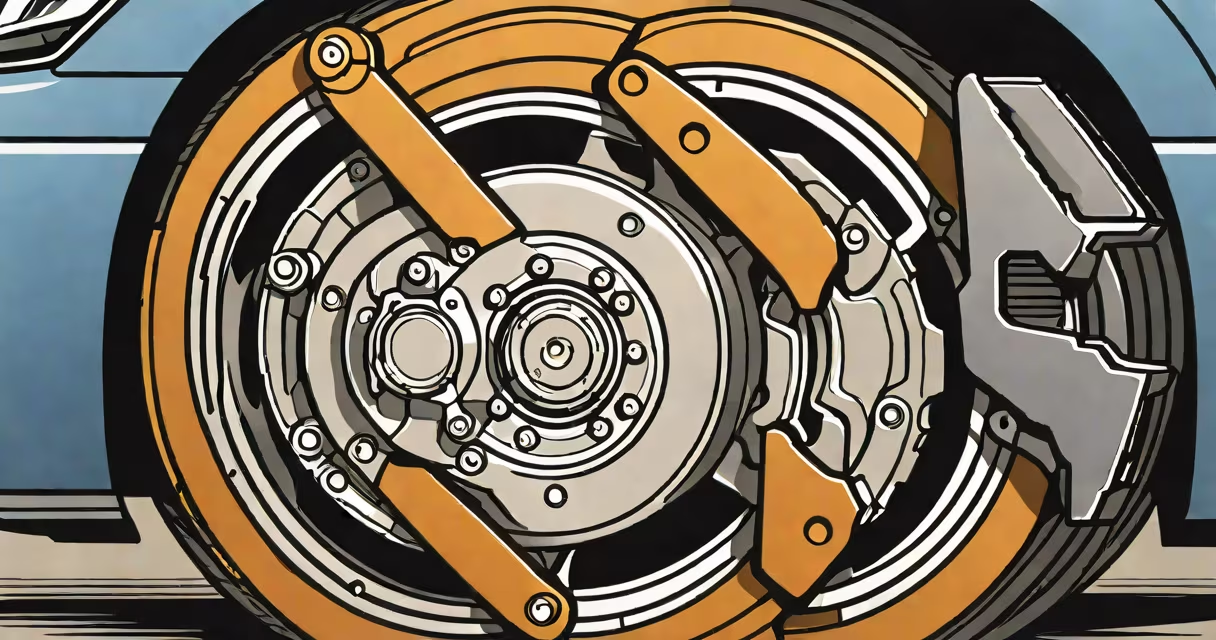
ABS stands for Anti-lock Braking System, a safety feature that prevents wheels from locking up during hard braking. The system rapidly pulses brake pressure to maintain traction, allowing drivers to steer while braking.
When a vehicle's wheels begin to lock up, the ABS control module detects the deceleration and reduces hydraulic pressure to that wheel. This happens in milliseconds, allowing the wheel to rotate freely again. The system repeats this cycle up to 15 times per second.
ABS consists of four main parts:
Most modern vehicles have four-channel ABS systems, meaning each wheel has its own speed sensor and valve. Some trucks and SUVs may have a simplified three-channel system for the rear axle.
The National Highway Traffic Safety Administration (NHTSA) estimates that ABS reduces fatal crashes by 4.4% and injury crashes by 5.3%. By preventing wheel lockup, ABS helps drivers maintain control during emergency stops, especially on slippery surfaces.
Many drivers confuse ABS with automatic braking systems or assume it shortens stopping distances. While ABS improves steering control, it doesn't necessarily reduce stopping distances. The system's primary benefit is maintaining tire contact with the road surface.
I noticed this firsthand when testing a car's braking performance on wet pavement. With ABS engaged, I could steer around obstacles while braking hard, whereas without ABS, the car would have skidded straight ahead.
| System Type | Channels | Typical Vehicles |
|---|---|---|
| Four-channel, four-sensor | 4 | Cars, most modern vehicles |
| 3 | Some trucks and SUVs | |
| Four-channel, three-sensor | 4 | Older vehicles, some motorcycles |
The system engages whenever it detects imminent wheel lockup. This typically occurs during:
Drivers may feel a pulsating sensation in the brake pedal or hear rapid clicking noises when ABS activates. These are normal operations and indicate the system is working properly.
For those who work on their own vehicles, a car pit stand can provide safe access to brake components during maintenance.