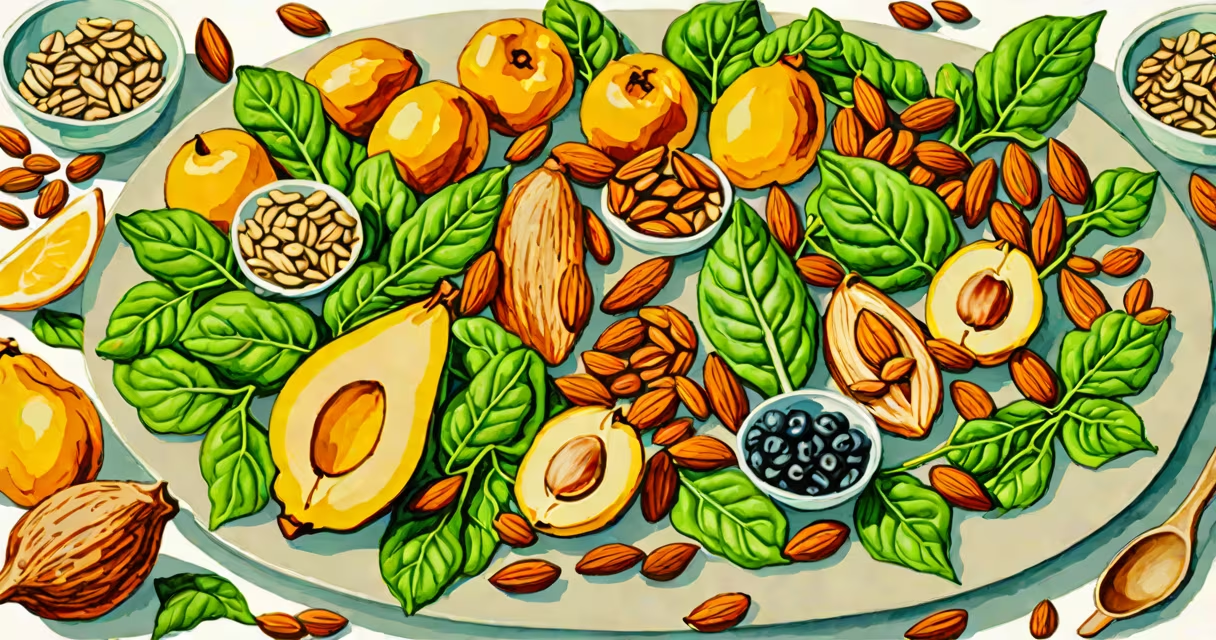
Vitamin E is a fat-soluble antioxidant that protects cells from oxidative damage, supports immune function, and promotes healthy skin in men. The body requires about 15 mg daily, though athletes or those with certain conditions may need more.
Vitamin E exists in eight forms, but only alpha-tocopherol meets human requirements. The liver absorbs it along with dietary fats and stores it in adipose tissue and the liver. Excess amounts exit through urine.
Research highlights these key benefits:
| Food | Vitamin E (mg per serving) |
|---|---|
| Almonds (1 oz) | 6.8 |
| Sunflower seeds (1 oz) | 5.9 |
| Spinach (1 cup cooked) | 3.2 |
| Avocado (1 medium) | 2.1 |
| Olive oil (1 tbsp) | 1.9 |
Severe deficiency is rare but can cause nerve damage, muscle weakness, and vision problems. Men with Crohn's disease or cystic fibrosis are at higher risk due to fat malabsorption. Doctors may prescribe supplements in these cases.
Most multivitamins contain vitamin E, but whole foods provide additional nutrients. I noticed improved skin texture after adding sunflower seeds to my daily diet-a small but noticeable change.
Contrary to popular belief, vitamin E does not prevent or treat prostate cancer. A 2011 JAMA study found high-dose supplements increased prostate cancer risk in healthy men. Stick to recommended doses unless directed otherwise by a doctor.