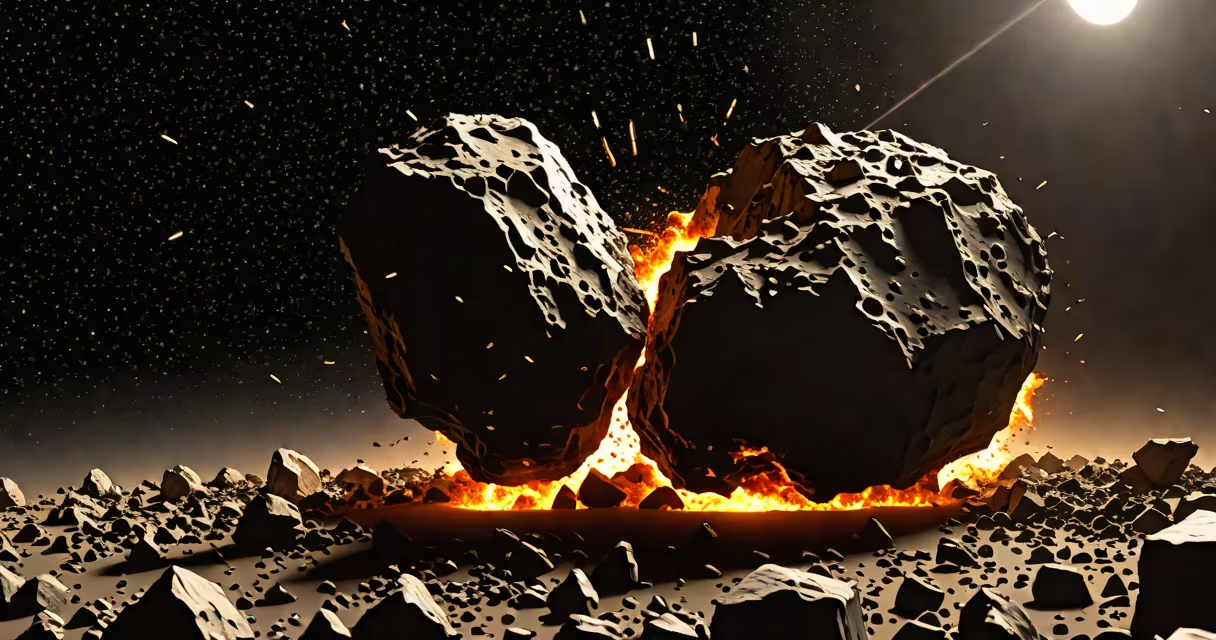
When an asteroid hits Earth, it releases energy equivalent to millions of tons of TNT, creating an explosion, fireball, and shockwave that can cause global devastation. The effects depend on size, speed, and impact location.
| Type | Size Range | Effects |
|---|---|---|
| Airburst | 10-50 meters | Explosion in atmosphere, shockwaves, fires |
| Local impact | 50 meters-1 kilometer | Crater formation, regional destruction |
| Global impact | 1 kilometer+ | Mass extinctions, climate change |
Impacts happen randomly across the globe. Most asteroids come from the asteroid belt between Mars and Jupiter. Earth's gravity pulls them in, and atmospheric friction determines whether they burn up or hit the surface.
Many think only massive asteroids cause damage. In reality, even small ones (20 meters wide) can release energy equal to the Hiroshima bomb. The Chelyabinsk meteor in 2013 injured 1,500 people despite being just 20 meters across.
NASA's DART mission successfully altered an asteroid's trajectory in 2022. Other methods include nuclear detonations, gravity tractors, and paintball tactics to change an asteroid's path.