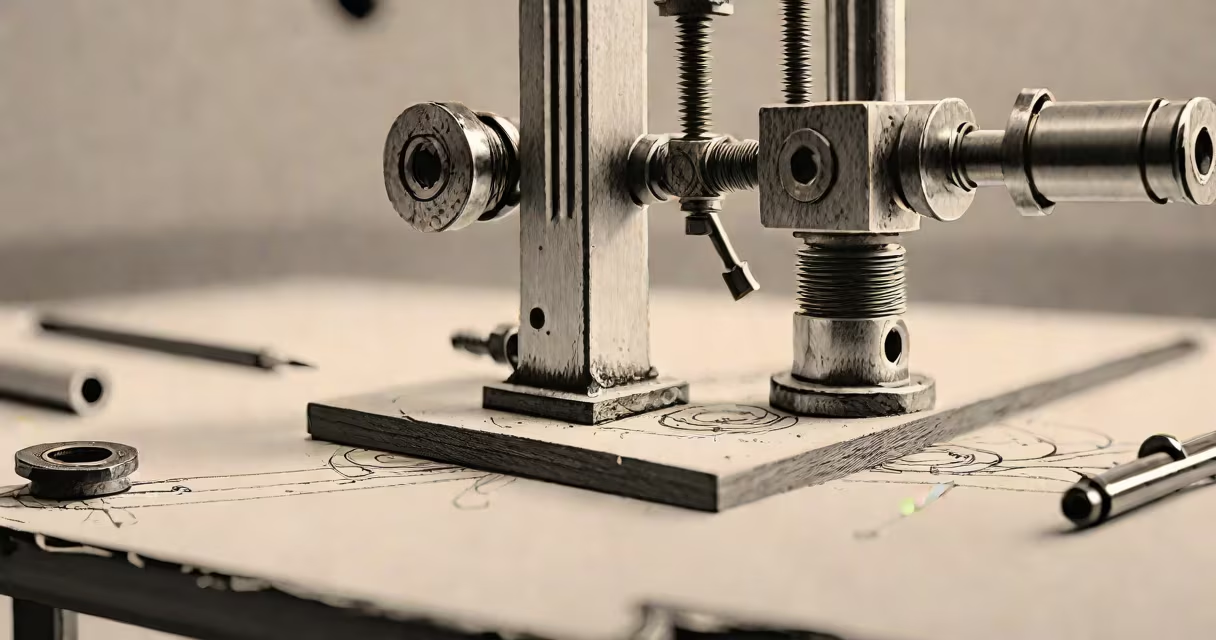
A knee mill is a vertical milling machine where the worktable rests on a vertically adjustable saddle mounted on a knee-shaped support column. This design allows the table to move up and down while remaining parallel to the spindle.
The knee mill operates through coordinated movements of its three axes:
Most knee mills also feature a rotating spindle head that holds various cutters. The spindle rotates at different speeds depending on the material being machined.
| Component | Function |
|---|---|
| Knee | Vertical support column containing the elevating mechanism |
| Table | Work surface that holds materials using T-slots and clamps |
| Spindle | Rotating shaft that holds cutting tools |
| Head | Housing containing spindle drive mechanisms and speed controls |
| Column | Main structural support that anchors the machine |
Knee mills excel at:
According to the Society of Manufacturing Engineers, knee mills remain popular in educational settings due to their manual operation that teaches fundamental machining principles.
Unlike bed mills (where the table moves along the bed), knee mills have a movable knee that supports the table. This design provides better accessibility for operators working with larger workpieces.
When operating a knee mill, always:
According to OSHA regulations, proper training is essential before operating any milling machine.
I've personally used a Bridgeport-style knee mill during my time in a small machine shop. The manual operation required careful coordination between both hands and feet to control the feeds while maintaining proper cutting depths. This hands-on experience gave me a deep appreciation for the precision engineering behind these machines.