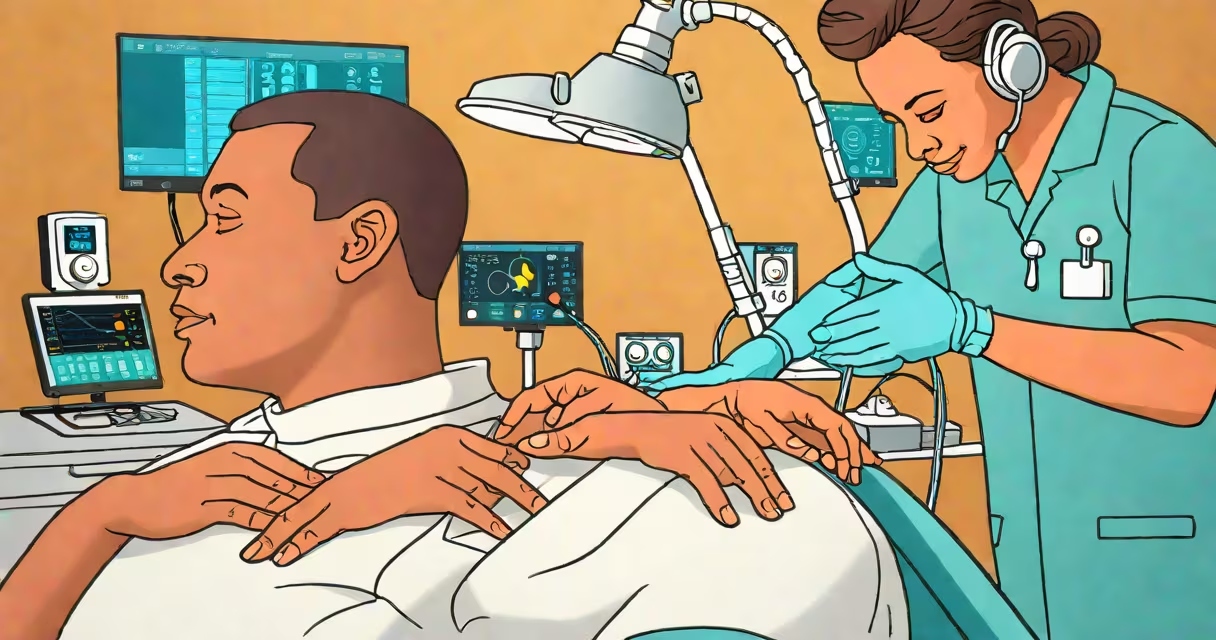
A musculoskeletal (MSK) ultrasound is a diagnostic imaging technique that uses high-frequency sound waves to visualize muscles, tendons, ligaments, joints, and other soft tissues in real time. Unlike X-rays or MRIs, it shows movement and function during examination.
An MSK ultrasound machine emits sound waves that bounce off structures in the body and return as echoes. These echoes create a live image on a screen, allowing doctors to assess tissue health, blood flow, and movement. The transducer (probe) is moved over the skin, capturing images from different angles.
MSK ultrasounds diagnose and monitor conditions like tendonitis, ligament tears, muscle strains, and joint inflammation. They guide injections, aspirate fluid, and evaluate sports injuries. Unlike static MRI scans, they show how tissues move during activity.
Many confuse MSK ultrasounds with general ultrasounds used during pregnancy. While both use sound waves, MSK ultrasounds focus on muscles, bones, and joints rather than fetal development. Another misconception is that they replace MRIs entirely-each has unique strengths.
| Feature | MSK Ultrasound | MRI |
|---|---|---|
| Imaging Type | Real-time, changing | Static, detailed |
| Best For | Soft tissue movement, guided procedures | Complex internal structures |
| Cost | Lower | Higher |
MSK ultrasounds depend on the technician's skill and can't penetrate bone or deep tissue as effectively as MRIs. They're also less effective for obese patients due to limited sound wave penetration. However, they're safer, faster, and more portable than MRIs.
I've seen firsthand how MSK ultrasounds help athletes recover faster by identifying subtle tendon issues early. A colleague used one to spot a partial tear in a runner's Achilles tendon that an MRI had missed because the injury was active.
Choose an MSK ultrasound for evaluating soft tissue injuries, guiding injections, or assessing joint problems dynamically. Opt for an MRI when deeper structures or complex anatomy need evaluation. Both tools complement each other in diagnostics.