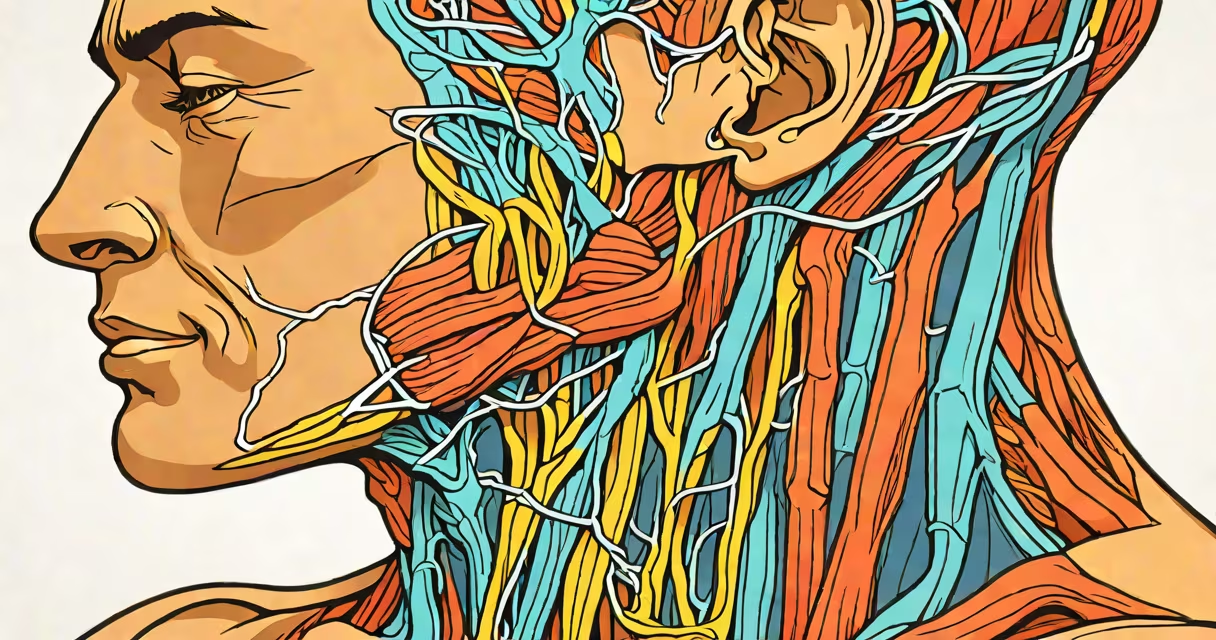
A neck strain occurs when muscles or tendons in your neck are overstretched or torn. This common injury often results from sudden movements, poor posture, or repetitive stress.
How Neck Strains Develop
Neck strains typically happen due to:
Sudden movement: Whiplash from car accidents is a classic example, where the head jerks forward and backward abruptly.
Poor posture: Slouching at a desk or looking down at a phone for extended periods strains neck muscles.
Repetitive stress: Activities like painting a ceiling or typing with poor ergonomics can lead to cumulative strain.
Main Types of Neck Strains
Type
Cause
Severity
Acute strain
Sudden trauma (e.g., whiplash)
Moderate to severe pain
Chronic strain
Repetitive stress (e.g., poor posture)
Mild to moderate pain
Acute strains often resolve within weeks, while chronic strains may persist if underlying causes (like posture) aren't addressed.
Symptoms and Diagnosis
Common symptoms include:
Localized pain in the neck or shoulders
Stiffness or reduced range of motion
Headaches, especially at the base of the skull
Muscle spasms or tenderness
Doctors diagnose neck strains through physical exams, checking for tenderness or limited mobility. Imaging (like X-rays) is rare unless fractures are suspected.
Treatment and Recovery
Most neck strains heal with conservative treatments:
Rest and ice: Apply ice for 15 minutes every few hours during the first 48 hours to reduce inflammation.
Heat therapy: After initial swelling subsides, apply heat to relax muscles.
Over-the-counter pain relievers: NSAIDs like ibuprofen can alleviate pain and swelling.
Physical therapy: Stretching and strengthening exercises restore mobility and prevent recurrence.
Severe cases may require prescription medications or injections, but surgery is almost never needed.
Prevention Tips
To avoid neck strains:
Adjust workstations to maintain neutral posture (e.g., computer screens at eye level).
Take breaks during prolonged activities (e.g., texting or driving).
Strengthen neck muscles with exercises like chin tucks and shoulder rolls.
Use proper technique during physical activities (e.g., lifting objects close to the body).
I once treated a chronic neck strain by swapping my couch for an ergonomic chair and adding 10-minute neck stretches to my morning routine. Pain improved within weeks.