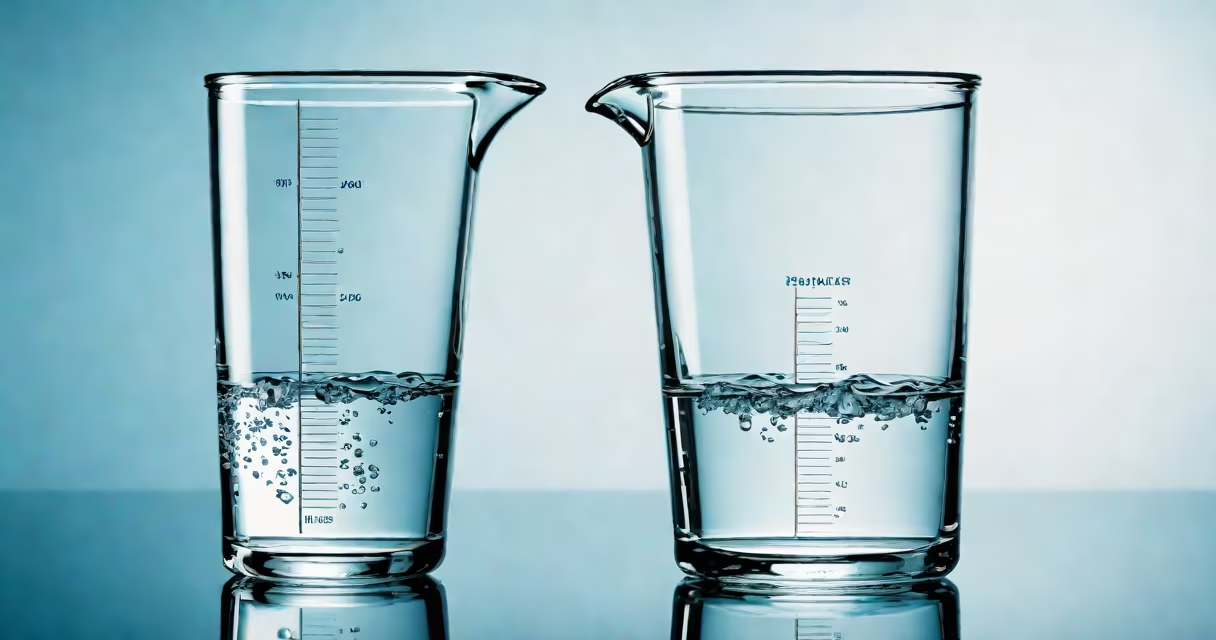
Distilled water has a pH level of 7, which makes it chemically neutral. This neutrality results from the absence of dissolved minerals and impurities, unlike tap or spring water.
Distillation removes contaminants through evaporation and condensation. Since most impurities don't evaporate at the same temperature as water, the resulting liquid is free of ions that could alter pH. The U.S. Geological Survey confirms that distilled water lacks these ions, ensuring its neutrality.
| Water Type | Typical pH Range |
|---|---|
| Distilled water | 7 |
| Tap water | 6.5-8.5 |
| Alkaline water | 8-9 |
| Acidic water | Below 7 |
Neutral pH is critical in labs and medical settings, where reactions depend on precise conditions. For example, pharmacists use distilled water to dilute medications without altering their chemical balance. At home, it's ideal for steam irons and car batteries, where mineral buildup causes damage.
Some assume distilled water is acidic because it reacts with carbon dioxide in the air, forming carbonic acid. However, this happens only after exposure-freshly distilled water remains at pH 7 until contaminated.
Rarely, distilled water may deviate slightly from pH 7. Factors like storage containers (plastic can leach acids) or airborne contaminants affect readings. Mountain Valley Water reports that even spring water can vary based on natural mineral content.