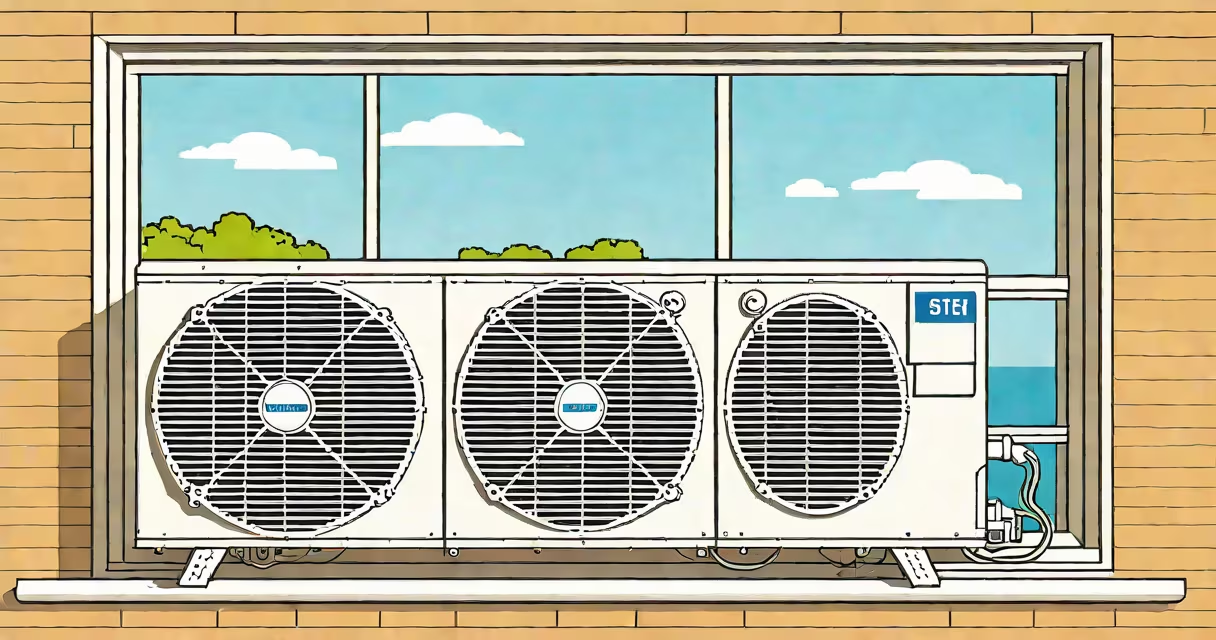
The biggest window air conditioner units have cooling capacities up to 18,000 BTU (British Thermal Units), designed for rooms up to 650 square feet. However, the largest unit available doesn't always mean the best fit for your space.
Window air conditioners are measured by their cooling capacity in BTUs. A higher BTU rating means the unit can cool a larger area. For example, a 10,000 BTU unit typically cools a 450-square-foot room, while an 18,000 BTU unit handles up to 650 square feet.
| BTU Rating | Room Size | Example Models |
|---|---|---|
| 14,000 BTU | 550-650 sq ft | LG LW1516ER, Frigidaire FFRE1422R1 |
| 16,000 BTU | 650-750 sq ft | Honeywell HL1616CESWA, Keystone KSTAP1604A |
| 18,000 BTU | 750-850 sq ft | Frigidaire FFRE1833S1, Midea MAW18V1QWT |
A larger unit isn't always better. Oversized units cycle on and off frequently, reducing efficiency and potentially causing humidity issues. Undersized units struggle to cool effectively. The U.S. Department of Energy recommends matching the unit's BTU rating to your room size for optimal performance.
For example, a 14,000 BTU unit is ideal for a 550-square-foot living room, while an 18,000 BTU unit suits a 750-square-foot basement. If you're unsure, measure your room dimensions and consult a sizing chart from the manufacturer.
Many assume bigger is always better, but efficiency and proper sizing are critical. Another mistake is ignoring energy efficiency ratings. Look for units with an Energy Efficiency Ratio (EER) of at least 10.0 for better performance and lower electricity costs.
I once helped a friend install a 16,000 BTU unit in a 600-square-foot apartment. The unit cooled the space effectively but struggled with humidity control because it was slightly oversized. A 14,000 BTU unit would have been a better fit.
If your window AC isn't cooling properly, check for common issues like clogged filters, blocked vents, or refrigerant leaks. Sometimes, cleaning or replacing filters can restore performance without needing a new unit.