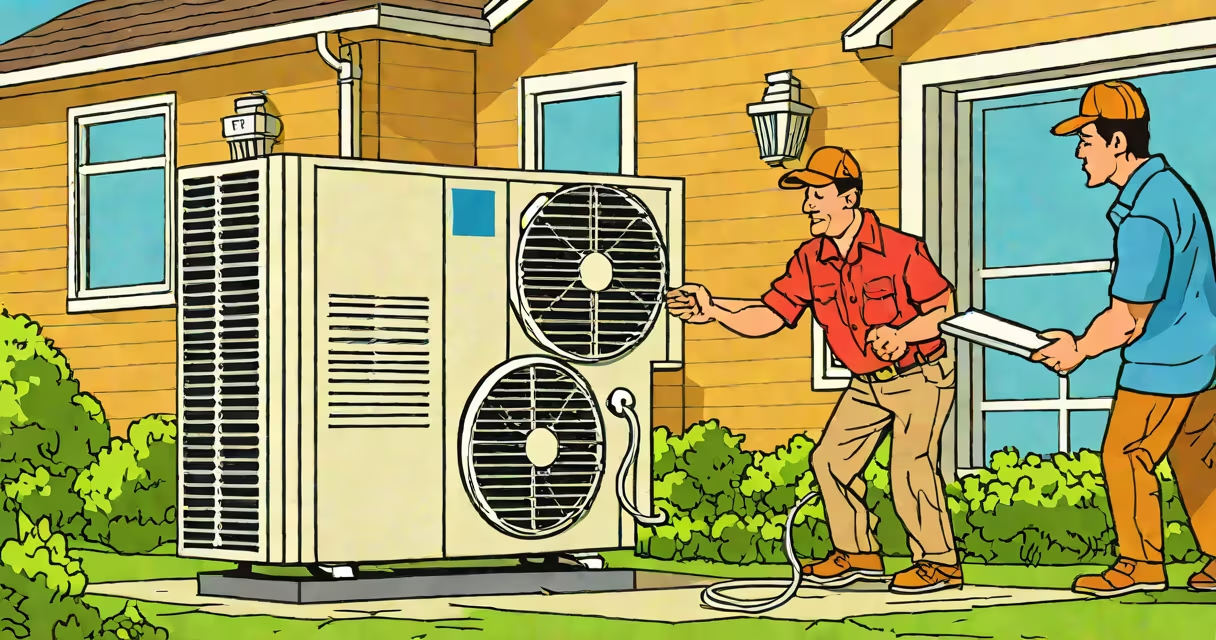
When your air conditioner stops working, check the thermostat settings, circuit breaker, and air filters first. Most AC failures stem from power issues, clogged filters, or refrigerant leaks.
Start with the simplest checks before moving to more complex solutions:
| Problem | Possible Cause | Solution |
|---|---|---|
| AC won't turn on | Power issue or thermostat problem | Check breaker and reset thermostat |
| AC runs but doesn't cool | Refrigerant leak or dirty coils | Call professional for refrigerant check |
| Weird noises | Loose parts or failing motor | Turn off unit and call technician |
| Water leakage | Clogged drain tube | Clear drain tube with vinegar solution |
Contact an HVAC technician if:
Professional repairs often cost $150-$450 depending on the issue. Annual maintenance contracts typically include priority service and discounted rates.
Regular maintenance prevents most AC failures. The U.S. Department of Energy recommends:
I learned this the hard way when my AC failed during a heatwave. After checking the obvious issues, I discovered a tripped breaker had cut power to the unit. A simple reset got it running again, saving me hundreds in emergency service calls.
Always turn off power to the AC unit at the breaker before performing any maintenance. Never attempt to repair electrical components unless you're qualified to do so. Improper handling of refrigerant can cause serious injury.