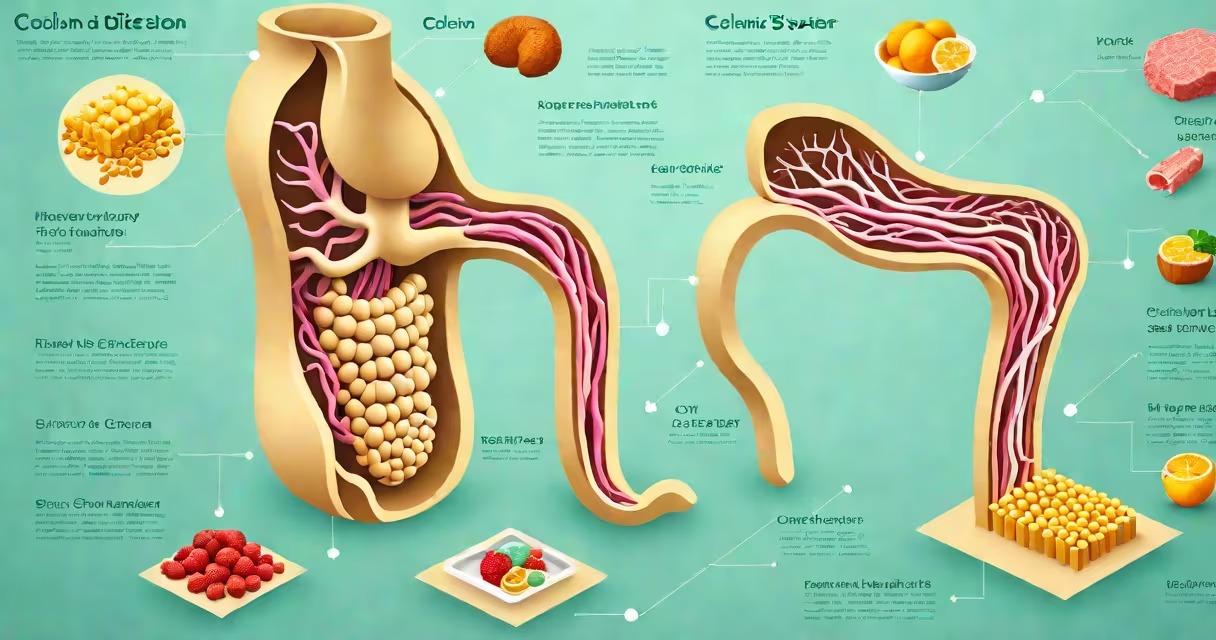
The colon is a long, coiled tube (about 5 feet) that forms the last part of your large intestine, wrapping around your small intestine. It runs from the cecum (start of large intestine) to the rectum.
The colon absorbs water and salts from undigested food and turns it into solid waste. It has four main sections: ascending, transverse, descending, and sigmoid. The inner walls have tiny pouches called haustra that give it a segmented look.
| Type | Description | Common Symptoms |
|---|---|---|
| Colon polyps | Small growths on the colon lining | Often none, but may cause bleeding |
| Diverticulitis | Inflammation of pouches in colon wall | Pain, fever, nausea |
| Colorectal cancer | Uncontrolled cell growth in colon or rectum | Changes in bowel habits, blood in stool |
Many confuse the colon with the rectum or anus. The colon processes waste, while the rectum stores it and the anus expels it. Some also mistake the colon for the small intestine, which digests food before waste reaches the colon.
I once helped a friend visualize their colon by tracing a garden hose around their belly button - it starts near the lower right side, moves up, crosses over to the left, then down to the lower left.
Regular screenings start at age 45 for average-risk adults. The American Cancer Society recommends colonoscopies every 10 years if results are normal. Other tests like sigmoidoscopies or CT colonographies may be alternatives.