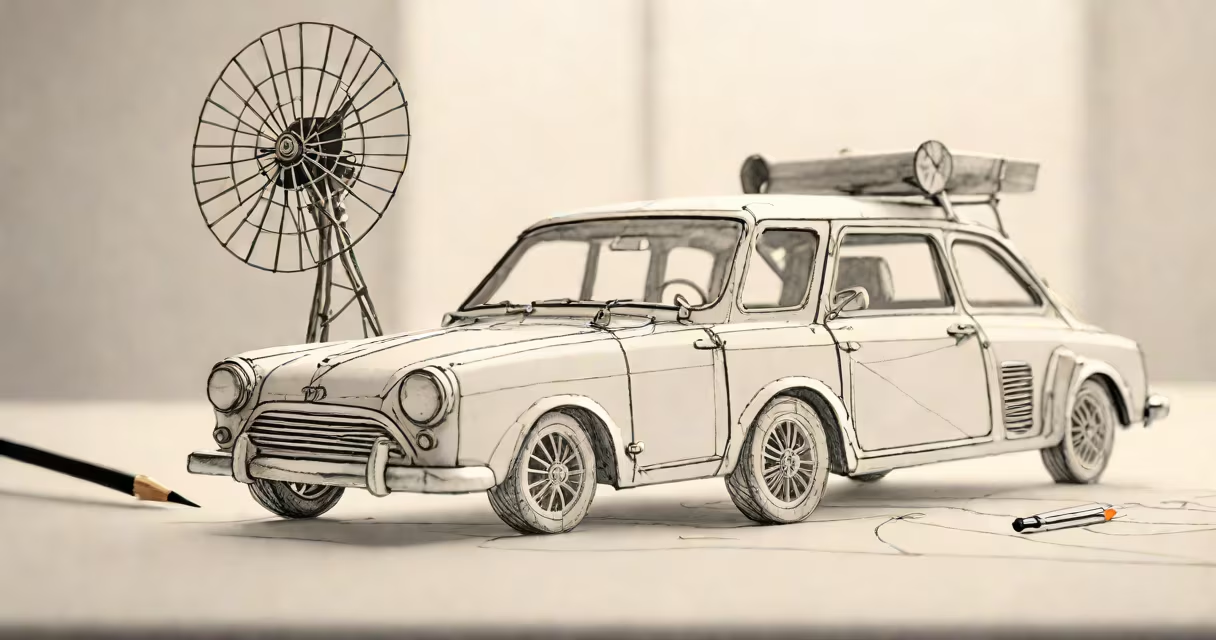
A wind-powered car STEM project is a hands-on engineering activity where students build a small vehicle propelled by wind energy. These projects teach key physics concepts like aerodynamics, energy transfer, and mechanical efficiency.
The basic principle involves converting wind energy into motion. A fan or hair dryer simulates wind, pushing against a sail or propeller attached to the car's axle. This force makes the wheels turn, propelling the vehicle forward. The faster the wind blows, the faster the car moves - demonstrating Newton's third law of motion (action-reaction).
Most designs use these parts:
| Design Type | Key Feature | Best For |
|---|---|---|
| Sail car | Vertical sail catches wind | Beginner projects |
| Propeller car | Horizontal propeller pushes air | Intermediate builders |
| Multi-sail car | Multiple sails for stability | Advanced experimentation |
Many assume these cars work like real wind turbines, generating electricity. In reality, they demonstrate direct mechanical energy transfer - wind pushes against a surface, creating motion without electrical components. Another myth is that bigger sails always mean faster cars. In my classroom tests, oversized sails often caused instability, reducing speed despite increased wind capture.
For a complete example, try this design: Use a cardboard rectangle as the chassis (6x4 inches), attach two bottle cap wheels to straw axles, and mount a 3x2 inch plastic sheet as a vertical sail. Place it in front of a fan set to medium speed - the car should move steadily across a table.
These projects align with NGSS standards for energy transfer and engineering design. According to the National Renewable Energy Laboratory, hands-on wind energy projects increase student engagement with STEM concepts by 40%. Many educators use them as science fair projects or classroom demonstrations of renewable energy principles.
When ready to upgrade, students can experiment with different sail materials, wheel sizes, or chassis weights to observe how each factor affects performance. Some advanced versions even incorporate gear systems to increase speed or add steering mechanisms.
After building, test your car on different surfaces (carpet vs. smooth table) to observe how friction affects movement. Measure distance traveled at various fan speeds to create data tables showing the relationship between wind speed and car velocity.