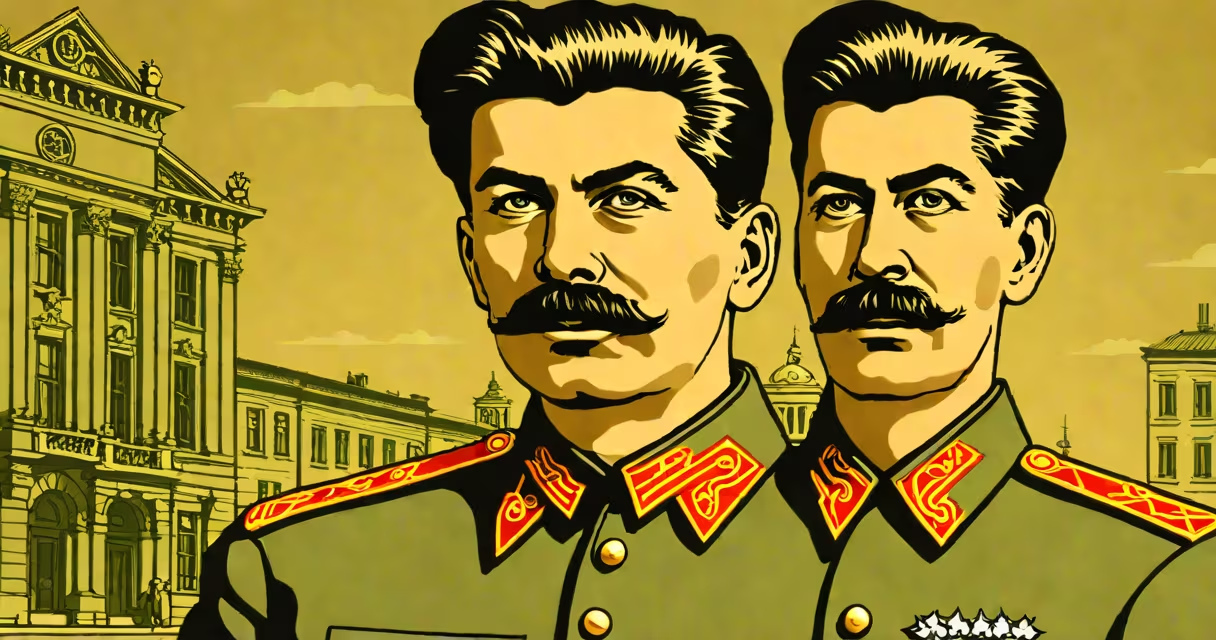
Young Joseph Stalin was a revolutionary activist who rose through the ranks of the Bolshevik Party to become the leader of the Soviet Union. Born Iosif Vissarionovich Dzhugashvili in 1878 in Gori, Georgia, he developed a fierce determination and political acumen during his formative years.
Stalin's childhood was marked by poverty and hardship. His father, a cobbler, was an alcoholic who frequently abused his family, while his mother worked as a laundress to support them. Despite these challenges, Stalin excelled in school, particularly in subjects like Russian literature and history. He attended the Tiflis Theological Seminary, where he studied to become a priest, but his growing interest in politics led him to leave before graduating.
In his late teens, Stalin became involved in the Marxist movement, joining the Social-Democratic Labour Party in 1898. He quickly gained a reputation as a skilled organizer and agitator, using his charisma and intelligence to rally workers and peasants to the cause of revolution. His early activities included distributing illegal literature, organizing strikes, and participating in underground meetings.
Stalin engaged in various revolutionary activities, including:
Stalin's revolutionary activities led to multiple arrests and exiles to Siberia. His first exile was in 1902, followed by several more between 1903 and 1913. Each time, he escaped and returned to the underground movement, demonstrating his unwavering commitment to the revolutionary cause. These experiences hardened his resolve and honed his political skills.
After the October Revolution in 1917, Stalin joined the Bolshevik Party and quickly rose through its ranks. His ability to go through the complex political field of the Soviet Union, along with his ruthless tactics, helped him secure key positions within the party. By the late 1920s, he had consolidated his power and became the General Secretary of the Communist Party, a position he used to eliminate his rivals and establish himself as the supreme leader of the USSR.
The young Joseph Stalin's formative years laid the foundation for his later rule. His experiences of poverty, political activism, and exile shaped his worldview and contributed to his authoritarian style of leadership. As the leader of the Soviet Union, he implemented policies that transformed the country but also resulted in widespread suffering and repression. Understanding his early life provides insight into the man who would shape the course of 20th-century history.