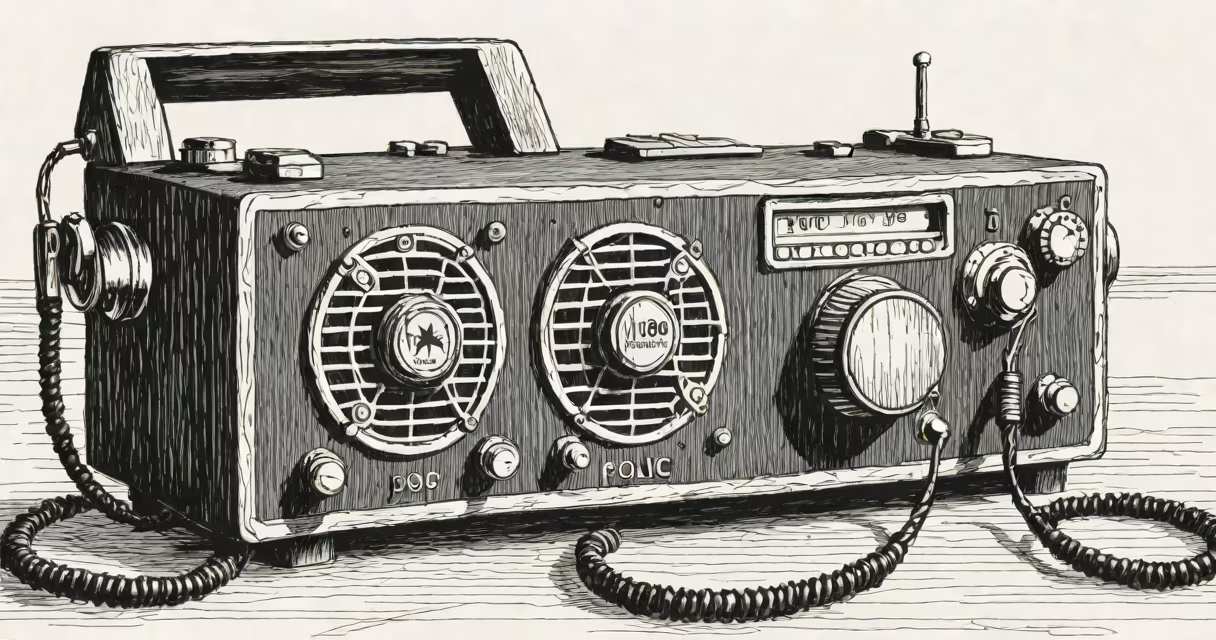
The 10-8 police code means "in service," indicating an officer is available to respond to calls. These ten-codes standardize communication between law enforcement and dispatch centers.
Ten-codes are numerical shorthand used in radio communications. The "10-" prefix followed by a single digit or two-digit number represents specific messages. For example, "10-4" means "message received," while "10-8" signals availability. The system reduces transmission time and minimizes errors during high-pressure situations.
| Code | Meaning |
|---|---|
| 10-1 | Unable to copy (unable to receive message) |
| 10-2 | Signal weak |
| 10-3 | Stop transmitting |
| 10-4 | Message received |
| 10-8 | In service (available for calls) |
| 10-9 | Say again |
| 10-20 | Location |
When an officer goes "10-8," they inform dispatch they're ready to respond to new calls. This status is critical for resource management. Dispatchers rely on it to allocate officers efficiently during emergencies. For instance, if a 911 call comes in, dispatch checks which officers are "10-8" to assign the closest available unit.
Many confuse "10-8" with "10-7" (out of service). While both relate to an officer's status, "10-7" means they're unavailable-perhaps on break or handling paperwork. "10-8" specifically means they're actively patrolling and ready for duty. Another mistake is assuming all departments use the same codes. Some agencies customize their ten-codes based on local needs.
I once observed a training session where officers practiced using ten-codes in simulated emergencies. The instructor emphasized that misusing "10-8" could delay responses. For example, if an officer marked themselves "10-8" while actually tied up with a pursuit, dispatch might send them to another call unnecessarily.
While primarily used by police, ten-codes appear in other fields like fire departments and medical services. However, meanings can differ. For example, in EMS, "10-8" might mean "in transit" rather than "in service." Always check context-specific codebooks for accuracy.