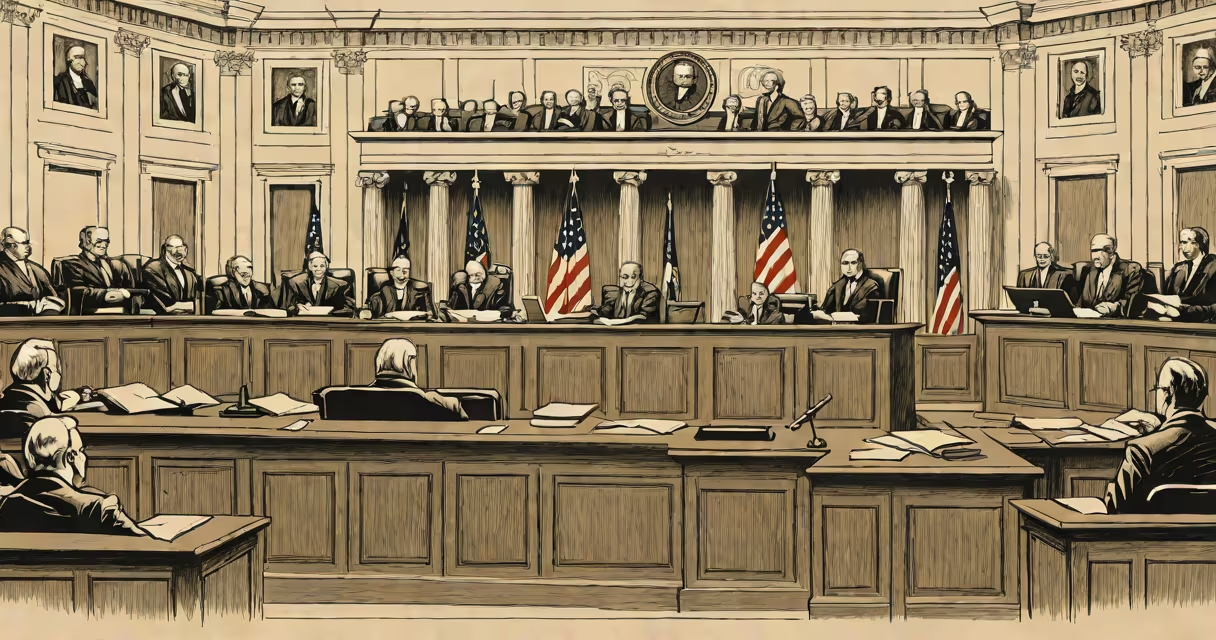
The 14th Amendment corporations interpretation refers to the legal principle that corporations have been granted constitutional rights originally intended for natural persons, particularly under the Equal Protection Clause.
This interpretation emerged from the 1886 Supreme Court case Santa Clara County v. Southern Pacific Railroad. While the ruling itself didn't explicitly declare corporations as persons, a headnote stated that "the defendant corporations are persons within the intent of the Fourteenth Amendment." This created precedent for treating corporations as legal persons with constitutional protections.
Corporations primarily use three 14th Amendment rights:
Another misconception is that corporate personhood gives businesses all human rights. In reality, corporations only receive those rights applicable to their legal status, such as contract and property rights, not voting or privacy rights.
In the 2010 Citizens United case, the Supreme Court ruled that corporations have free speech rights under the 14th Amendment, allowing unlimited independent political expenditures. This decision transformed campaign finance laws by permitting corporations to spend money on elections as a form of protected speech.
When researching this topic, I examined the original court transcripts from Santa Clara County v. Southern Pacific Railroad. The actual ruling was much narrower than commonly understood, focusing on tax assessment procedures rather than broad corporate rights.
| Aspect | Natural Persons | Corporations |
|---|---|---|
| Voting Rights | Protected | Not applicable |
| Privacy Protections | Protected | Limited application |
| Contract Rights | Protected | Fully protected |