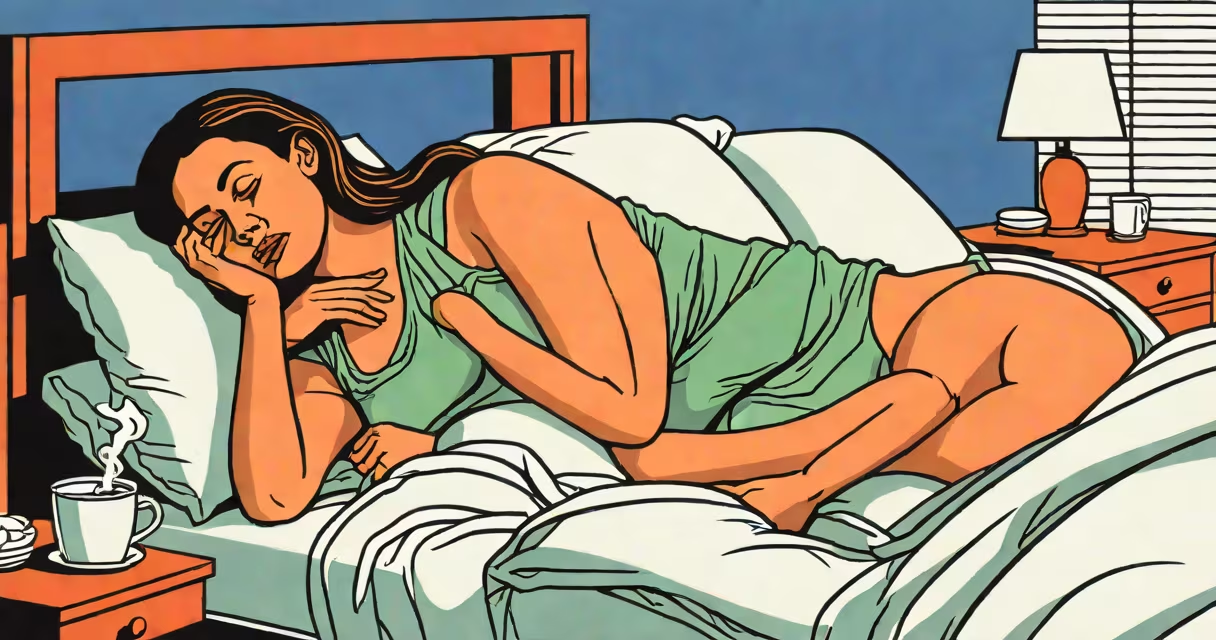
First trimester cramping at night refers to abdominal pain or discomfort experienced during sleep in early pregnancy. This symptom can occur due to normal physiological changes or indicate potential complications.
How It Works
During the first trimester, your uterus expands rapidly to accommodate the growing embryo. This expansion, along with hormonal changes, can cause cramping sensations similar to menstrual cramps. At night, when your body is relaxed, you may become more aware of these sensations.
Main Causes
The most common causes of first trimester cramping at night include:
Implantation: When the fertilized egg attaches to the uterine lining, it can cause mild cramping (about 6-12 days after conception)
Uterine expansion: As the uterus grows, the round ligaments that support it stretch and tighten, causing discomfort
Gas and bloating: Progesterone slows digestion, leading to increased gas and bloating, which can mimic cramping
Braxton Hicks contractions: These "practice" contractions can occur in the first trimester, though they're more common later in pregnancy
When to Worry
While first trimester cramping at night is often normal, contact your healthcare provider if you experience:
Severe, persistent pain that doesn't subside with rest or hydration
Cramping accompanied by vaginal bleeding or heavy spotting
Low back pain or pressure in the pelvic area
Fever, chills, or other signs of infection
According to the American Pregnancy Association, about 20% of pregnant people experience some form of abdominal pain during the first trimester. Most cases are harmless, but it's essential to monitor symptoms closely.
Common Misconceptions
Many people confuse first trimester cramping with other conditions, such as:
Menstrual cramps: Unlike menstrual cramps, pregnancy-related cramping typically occurs earlier in the cycle and may be accompanied by other early pregnancy symptoms like fatigue or nausea
Digestive issues: While gas and bloating can cause discomfort, they usually don't produce the rhythmic, contraction-like sensations associated with uterine activity
Urinary tract infections (UTIs): UTIs can cause pelvic pain and frequent urination, but they're often accompanied by burning during urination and cloudy or strong-smelling urine
Finding Relief
To alleviate first trimester cramping at night, try these strategies:
Stay hydrated: Dehydration can exacerbate cramping, so drink plenty of water throughout the day
Change positions: Shift your sleeping position to relieve pressure on your abdomen
Use a heating pad: Apply gentle heat to your lower abdomen to relax the muscles and reduce discomfort
Practice relaxation techniques: Deep breathing, meditation, or prenatal yoga can help ease tension and promote better sleep
I noticed significant relief from nighttime cramping after elevating my legs with a pregnancy pillow and practicing guided meditation before bed. The combination helped me relax and reduced the intensity of the cramps.
When to Seek Medical Attention
If first trimester cramping at night persists or worsens, consult your healthcare provider. They may recommend an ultrasound or other tests to rule out complications like ectopic pregnancy or miscarriage. According to the Mayo Clinic, about 10-20% of known pregnancies end in miscarriage, most commonly within the first 13 weeks of pregnancy.