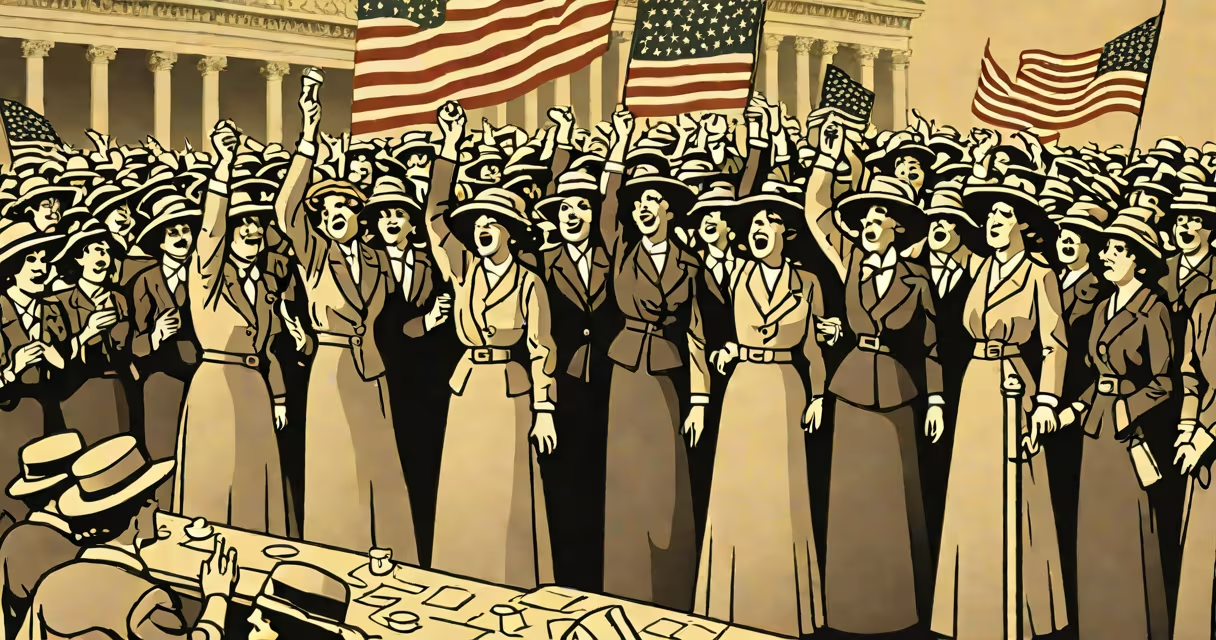
The 19th Amendment was passed by Congress on June 4, 1919, and ratified by the required number of states on August 18, 1920. This amendment to the U.S. Constitution granted women the right to vote, ending nearly a century of activism by women's suffrage movements.
After the Senate approved the amendment on June 4, 1919, it went to the states for ratification. The process took over a year, with Tennessee becoming the 36th state to ratify the amendment on August 18, 1920. This met the three-fourths majority required by the Constitution. Secretary of State Bainbridge Colby certified the ratification on August 26, 1920, making the 19th Amendment officially part of the Constitution.
The 19th Amendment prohibits any U.S. citizen from being denied the right to vote based on sex. It states:
"The right of citizens of the United States to vote shall not be denied or abridged by the United States or by any State on account of sex."
This simple language had profound effects, granting millions of American women the right to participate fully in the democratic process.
Before the 19th Amendment, women's suffrage movements used various strategies:
Many people confuse the 19th Amendment with other milestones in women's suffrage:
| Misconception | Fact |
|---|---|
| It gave all women the right to vote nationwide immediately | Some states, particularly in the South, used poll taxes and literacy tests to disenfranchise Black women and men |
| It was the first time women voted in the U.S. | Women could vote in some Western states like Wyoming (since 1890) and Colorado (since 1893) |
| It was passed quickly and easily | The amendment faced intense opposition and took over 70 years of activism to achieve |
The 19th Amendment transformed American democracy. In the 1920 election, an estimated 8 million women voted - more than 26% of the total vote. This marked the first presidential election in which women could vote nationwide.
While the 19th Amendment was a monumental achievement, it didn't end all voting disparities. Native Americans, for example, weren't guaranteed citizenship until 1924, and racial discrimination continued to suppress voting rights for decades. The amendment represented a important step toward equal participation in democracy, though the fight for universal suffrage continued long after its passage.