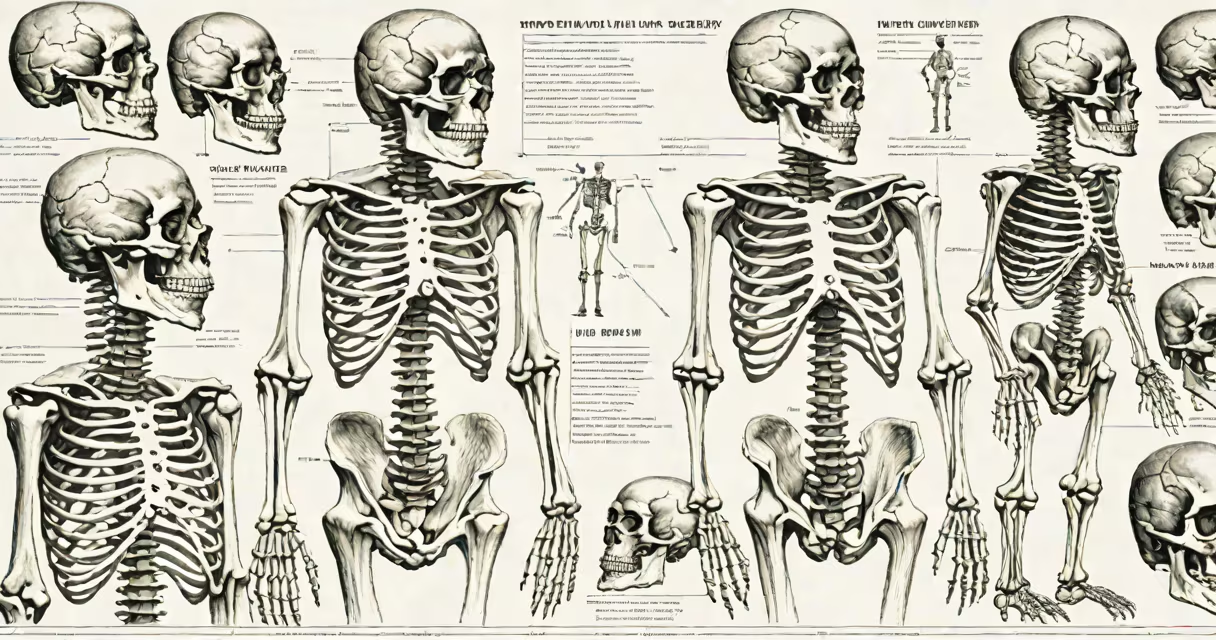
The human body contains 206 bones in adulthood, forming the skeletal system that provides structure, protection, and support for movement. This number varies slightly during development, as babies are born with around 270-300 bones that fuse together over time.
The 206 bones connect at joints, allowing the body to move while protecting important organs like the heart and brain. Bones also produce blood cells through marrow and store minerals like calcium and phosphorus.
The skeletal system divides into five categories:
| Bone Group | Number of Bones | Examples |
|---|---|---|
| Axial Skeleton | 80 | Skull, spine, rib cage |
| Appendicular Skeleton | 126 | Arms, legs, shoulders, pelvis |
| Long Bones | Varies | Femur, humerus, tibia |
| Short Bones | Varies | Wrists, ankles |
| Flat Bones | Varies | Skull, shoulder blades, ribs |
Babies are born with around 270-300 bones, which gradually fuse as they grow. For example, the skull starts as several separate plates that join together during childhood. By adulthood, most bones have fused, reducing the total count to 206.
Many people believe the number of bones never changes, but the skeletal system is changing. Bones can break, heal, and even regrow under certain conditions., some individuals may have extra bones due to genetic variations, such as sesamoid bones in tendons.
I once saw a medical scan showing an extra sesamoid bone in someone's foot-a small, round bone near the big toe joint. These extra bones don't always cause problems but can sometimes lead to discomfort or require special footwear.
Bones serve multiple functions beyond structure and movement. They protect organs, produce blood cells, and store essential minerals. For example, the rib cage shields the heart and lungs, while the pelvis supports the spine and protects reproductive organs.
Bones also play a important role in blood production. The marrow inside long bones, like the femur, generates red and white blood cells, which are important for oxygen transport and immune defense.