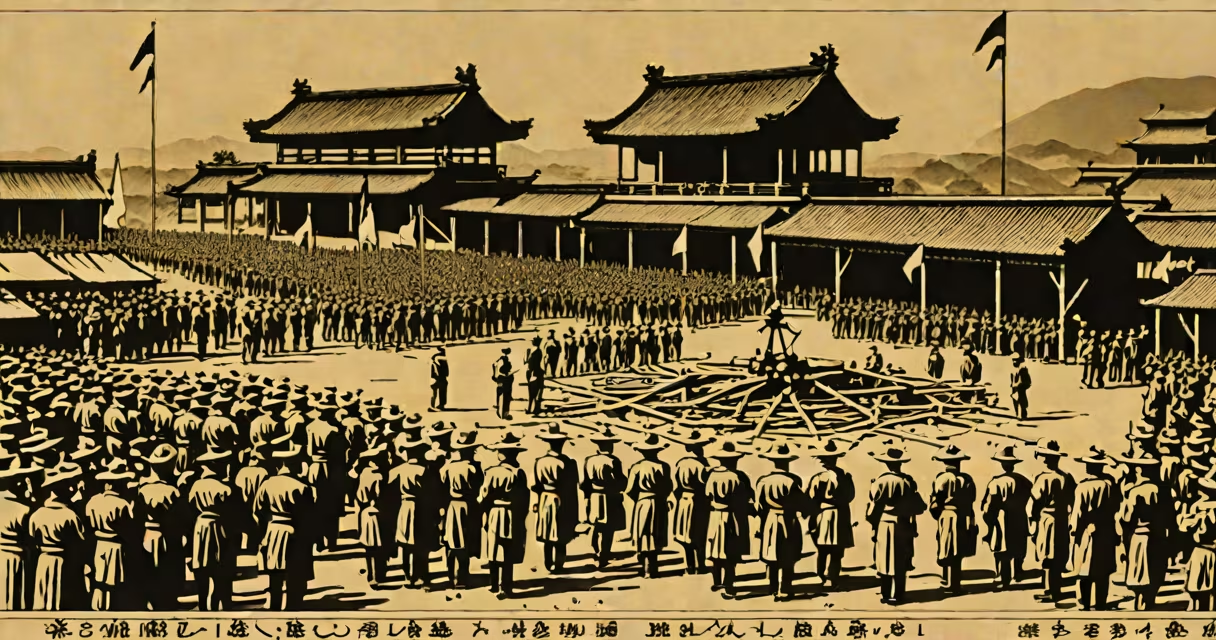
The 28th September public holiday in Taiwan commemorates the 1945 surrender of Japanese forces, marking the end of 50 years of colonial rule and the return of Taiwan to the Republic of China.
This day is officially known as Taiwan Retrocession Day (台灣光復節) and is one of Taiwan's most significant historical observances. While not a full-day public holiday, government offices and schools often hold special ceremonies or educational programs.
The day is marked by memorial ceremonies, particularly at the Retrocession Memorial Hall in Taipei. Schools often incorporate related lessons into their curricula, and media outlets may feature documentaries or special reports about Taiwan's colonial history.
The primary event is the wreath-laying ceremony at the Retrocession Memorial Hall, attended by government officials and veterans' groups. The hall itself was built in 1995 to commemorate the 50th anniversary of Taiwan's retrocession.
Another key tradition is the recitation of historical documents, such as the Proclamation of Retrocession of Taiwan, which was issued by Chiang Kai-shek on October 25, 1945. While this proclamation came slightly later, it formalized the transfer of sovereignty.
Another misunderstanding is that Retrocession Day marks Taiwan's independence. In reality, it commemorates the transfer of control Republic of China, not independence from China.
During my visit to the Retrocession Memorial Hall, I observed students participating in guided tours focused on Taiwan's colonial history. The exhibits trace the complex relationship between Taiwan and Japan, highlighting both the challenges and achievements of this period.
One exhibit that stood out was a replica of the radio broadcast room where the surrender was announced. This tangible connection to history helped bring the significance of the day to life for visitors.
The 28th September public holiday serves as an important reminder of Taiwan's unique historical path. While it may not receive the same level of public attention as other holidays, its educational value in promoting historical awareness cannot be overstated.
As Taiwan continues to go through its international relationships, understanding this day helps contextualize its present-day identity and aspirations.