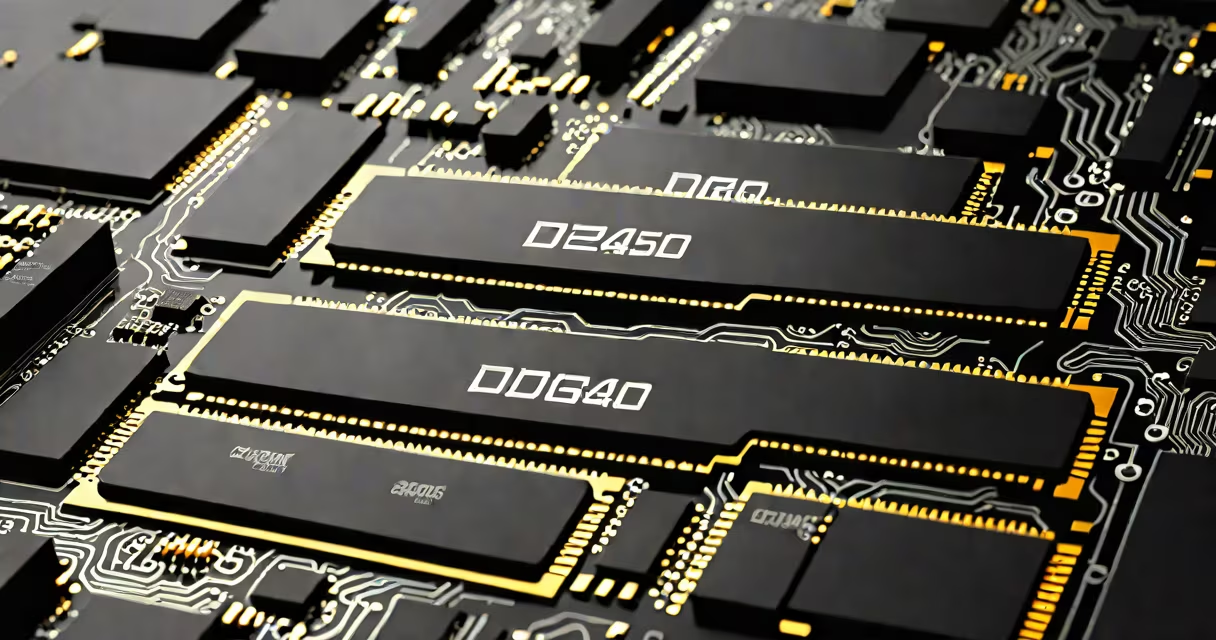
64GB DDR4 3600MHz RAM is a high-capacity, high-speed computer memory configuration using DDR4 SDRAM technology running at 3600 megahertz. It combines large storage capacity with fast data transfer speeds for demanding applications.
DDR4 (Double Data Rate 4) is the fourth generation of DDR memory. The "3600MHz" rating indicates the module's effective data rate, meaning it can transfer data 3,600,000,000 times per second. This high-speed operation enables faster processing of large datasets compared to slower DDR4 modules.
Each 64GB kit typically consists of two 32GB DDR4 modules running in dual-channel mode, which doubles the data transfer bandwidth between the memory and CPU. The increased bandwidth improves performance in multitasking, video editing, and other memory-intensive tasks.
| Configuration | Speed | Typical Use Case |
|---|---|---|
| 2x32GB | 3600MHz | High-end gaming PCs, video editing workstations |
| 4x16GB | 3600MHz | Professional workstations, virtual machines |
Most 64GB DDR4 kits come in either 2x32GB or 4x16GB configurations. The 2x32GB setup is popular among gamers and content creators who need high speeds and large capacity. The 4x16GB configuration is often used in professional workstations running multiple virtual machines or handling large datasets.
This memory configuration is ideal for:
For example, a video editor working with 8K footage in Adobe Premiere Pro would benefit from 64GB of DDR4 3600MHz RAM. The large capacity allows for smooth playback of multiple high-resolution video tracks, while the high speed ensures quick access to frequently used data.
Many users believe that simply installing faster RAM will dramatically improve their system's performance. However, the actual benefits depend on the specific workload and other system components. For most everyday tasks like web browsing or office work, the difference between 3600MHz and 3200MHz RAM is negligible.
Another common misconception is that more RAM always equals better performance. While having sufficient RAM is important, exceeding your system's needs doesn't provide additional benefits. For most gaming setups, 16GB or 32GB of RAM is sufficient, and the extra cost of 64GB may not be justified unless you're running memory-intensive applications.
I recently upgraded my video editing workstation from 32GB DDR4 3200MHz to 64GB DDR4 3600MHz. The difference was noticeable when working with multiple 4K video streams and complex effects. Render times decreased by about 15%, and the system could handle more simultaneous video tracks without slowing down. The higher speed also improved the responsiveness of the editing software, making the workflow smoother.
According to a study by Tom's Hardware, upgrading of RAM can improve performance in memory-intensive applications by up to 20%, while increasing speed provides a smaller but still noticeable improvement of around 5-10%. These improvements are most noticeable in professional applications rather than general computing tasks.
For users considering a RAM upgrade, it's important to balance capacity and speed based on your specific needs. If you're building a gaming PC, 256GB RAM DDR4 might be overkill, but for professional workstations, the extra capacity can provide significant benefits in the right applications.