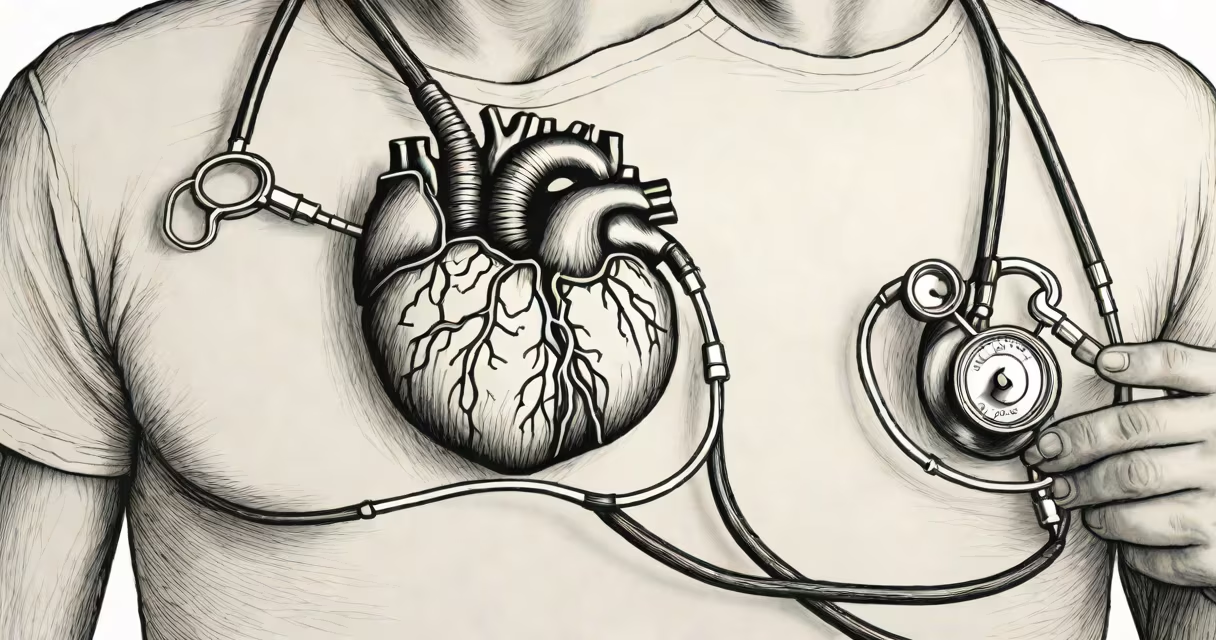
A heart murmur is an unusual sound, such as a whooshing or swishing noise, detected by a doctor during a heartbeat using a stethoscope. These sounds occur when blood flows turbulently through the heart's chambers or valves.
Heart murmurs result from disrupted blood flow within the heart. The heart's valves normally open and close smoothly, allowing blood to flow in one direction. However, if a valve doesn't open or close properly, blood can flow backward or leak around the valve, creating turbulence and the characteristic murmur sound.
Murmurs can occur during systole (when the heart muscle contracts) or diastole (when the heart muscle relaxes). They can be classified as innocent (harmless) or abnormal (indicating a potential heart problem). Innocent murmurs are common in children and healthy adults, while abnormal murmurs may signal conditions like valve stenosis or regurgitation.
| Type | Timing | Cause |
|---|---|---|
| Systolic murmur | During heart contraction | Most common type, often due to aortic or mitral valve issues |
| Diastolic murmur | During heart relaxation | Less common, usually related to mitral or tricuspid valve problems |
| Continuous murmur | Throughout the cardiac cycle | Rare, often caused by abnormal connections between arteries and veins |
Doctors use heart murmurs as a diagnostic tool to assess heart function. They listen for murmurs during a physical examination, often as part of a routine check-up or when investigating symptoms like chest pain, shortness of breath, or fatigue. Murmurs can help identify underlying heart conditions, such as valve disorders or congenital heart defects.
For example, a loud systolic murmur heard at the left sternal border may indicate aortic stenosis, a condition where the aortic valve narrows and restricts blood flow. Similarly, a diastolic murmur heard at the heart's apex may suggest mitral valve regurgitation, where blood leaks backward through the mitral valve.
One common misconception is that all heart murmurs are harmful. In reality, many murmurs are innocent and do not require treatment. Innocent murmurs are often found in children and healthy adults and typically disappear over time. However, abnormal murmurs may indicate a serious heart condition and require further evaluation.
Another misconception is that heart murmurs always cause symptoms. While some murmurs may be associated with symptoms like fatigue or shortness of breath, others may be asymptomatic and only detected during a routine physical examination. It's essential to consult a healthcare professional for an accurate diagnosis and appropriate management.
I once had a patient who was concerned after hearing they had a heart murmur. After explaining that their murmur was innocent and did not require treatment, they felt relieved and understood the importance of regular check-ups to monitor their heart health.
A heart murmur is an unusual sound heard during a heartbeat, often caused by turbulent blood flow or valve problems. Understanding the different types of murmurs and their implications can help individuals make informed decisions about their heart health. If you have concerns about a heart murmur, consult a healthcare professional for personalized advice and guidance.