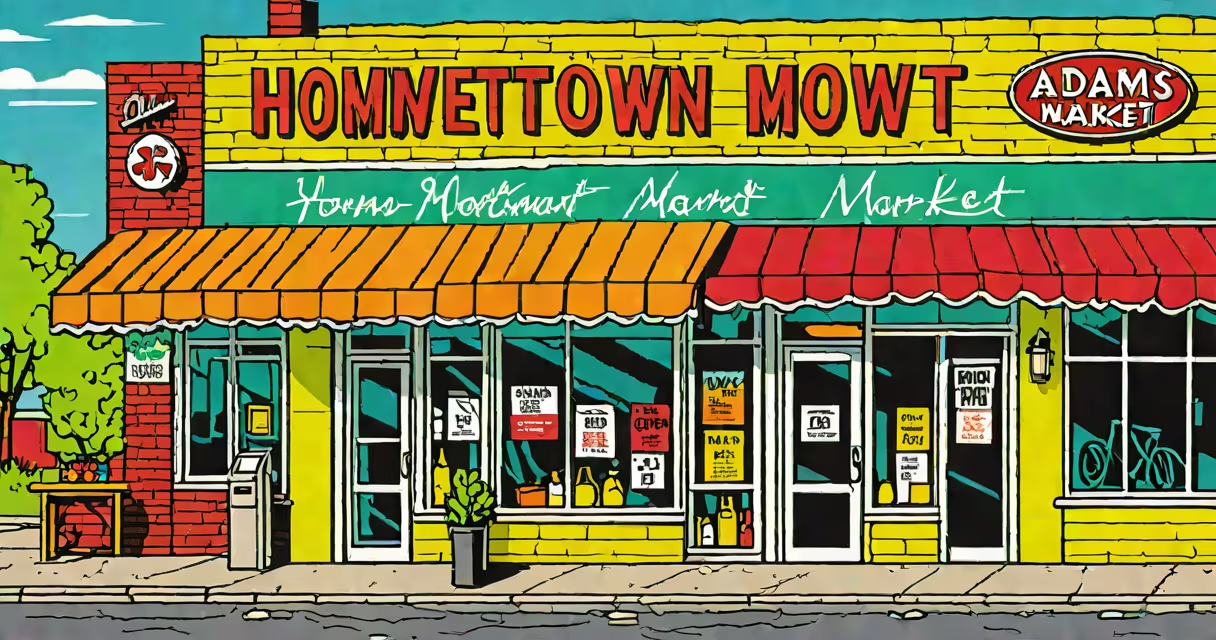
Adams Hometown Market is a family-owned grocery chain operating in rural Midwest communities, offering affordable fresh food and essentials. The company maintains a strong local presence while competing against national chains.
The chain operates 30+ stores across Iowa, Minnesota, and Wisconsin. Each location employs 20-50 staff members, mostly residents of the towns they serve. Stores average 25,000 square feet, stocking 15,000-20,000 products including groceries, pharmacy items, and hardware supplies.
Most locations feature a meat counter with locally sourced products. The company processes 1.2 million pounds of beef annually through its own processing facility. This vertical integration helps maintain consistent quality and pricing.
| Store Type | Square Footage | Key Features |
|---|---|---|
| Standard Market | 20,000-25,000 sq ft | Full grocery selection, pharmacy, basic hardware |
| Express Market | 12,000-15,000 sq ft | Limited grocery selection, no pharmacy |
| Supermarket | 30,000+ sq ft | Expanded bakery, deli, and frozen food sections |
Adams Hometown Market serves communities of 500-5,000 people where national chains often won't operate. The company fills a critical gap in rural food access. About 63% of Americans live within 10 miles of a national chain grocery store, but that drops to 37% in rural areas according to USDA data.
Local residents rely on these stores for convenience and community connection. Many customers prefer supporting local businesses over national chains. The company's longevity - some locations have operated for over 50 years - demonstrates its value to these communities.
People often assume these stores can't compete with national chains on price or selection. However, Adams Hometown Market's vertical integration allows competitive pricing on key items like meat. Their selection focuses on high-demand staples rather than niche products.
Take the Adams store in Estherville, IA. This 22,000 sq ft location employs 28 locals and serves a town of 6,200 people. Their meat department processes 80,000 pounds of beef annually, much of it from nearby farms. The store's pharmacy fills about 120 prescriptions daily, many for elderly residents who find the local service more convenient than traveling to larger cities.
During my visit, I noticed how the staff knew regular customers by name. The manager told me about their program donating unsold produce to the local food bank, which serves 150 families monthly. This level of community engagement is typical across Adams locations.