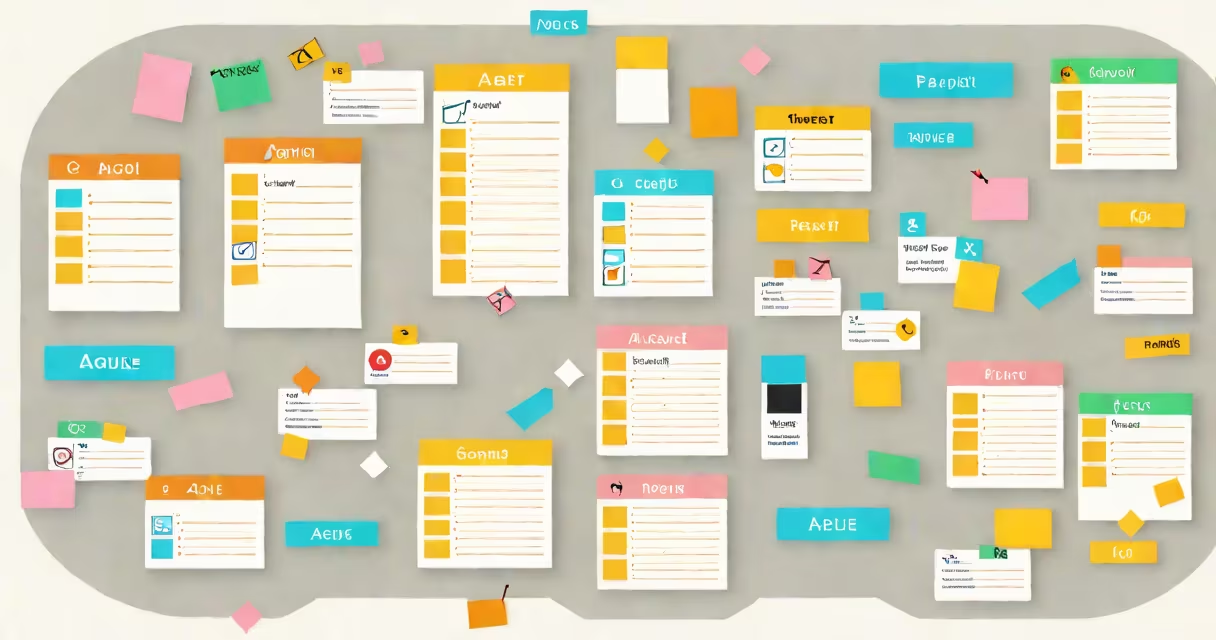
An agile project phase is a time-bound segment of work within an agile structure, typically lasting 1-4 weeks. These phases, called iterations or sprints, break projects into manageable chunks to deliver incremental value.
Agile phases operate in cycles. Each begins with planning, moves through execution, and ends with review. The Scrum Guide defines a sprint as "a time-box of one month or less during which a specific piece of work has to be completed and made ready for review."
For example, a software team might plan a two-week sprint to build a login feature. They estimate tasks, develop code daily, then demo the working feature at sprint's end. This cycle repeats until the project finishes.
| Phase Type | Duration | Key Activities |
|---|---|---|
| Sprint (Scrum) | 1-4 weeks | Planning, daily standups, development, review |
| Iteration (Kanban) | Continuous flow | Task pull, WIP limits, continuous delivery |
| Cycle (Extreme Programming) | 1-2 weeks | Pair programming, test-driven development, integration |
Agile phases are used in software development, marketing campaigns, and even hardware projects. They adapt to changing requirements and reduce risk by delivering small, functional pieces frequently.
A 2020 study by the Project Management Institute found that 71% of organizations using agile completed projects successfully, compared to 58% using traditional methods. Agile phases enable this success by embedding feedback loops.
Many confuse agile phases with waterfall stages. Unlike waterfall's linear progression, agile phases are iterative and adaptive. For example, a waterfall project might have distinct design, development, and testing phases. An agile project tests continuously within each sprint.
Another mistake is assuming agile phases eliminate documentation. The Agile Manifesto values "working software over complete documentation," but documentation still occurs-just in smaller, phase-aligned chunks.
Consider a team building an e-commerce site. Their first sprint might focus on the homepage:
The next sprint might add product listings, incorporating feedback from the first sprint.
When I led a team migrating a legacy system to cloud services, we used two-week sprints. Each phase included a spike-a time-boxed research task-to explore unknowns like API limitations. This approach surfaced challenges early, saving months of rework.
Agile project phases structure work in short, feedback-driven cycles. By delivering small, functional pieces frequently, they adapt to change and reduce risk. Whether in software, marketing, or hardware, these phases enable teams to pivot quickly and deliver value incrementally.