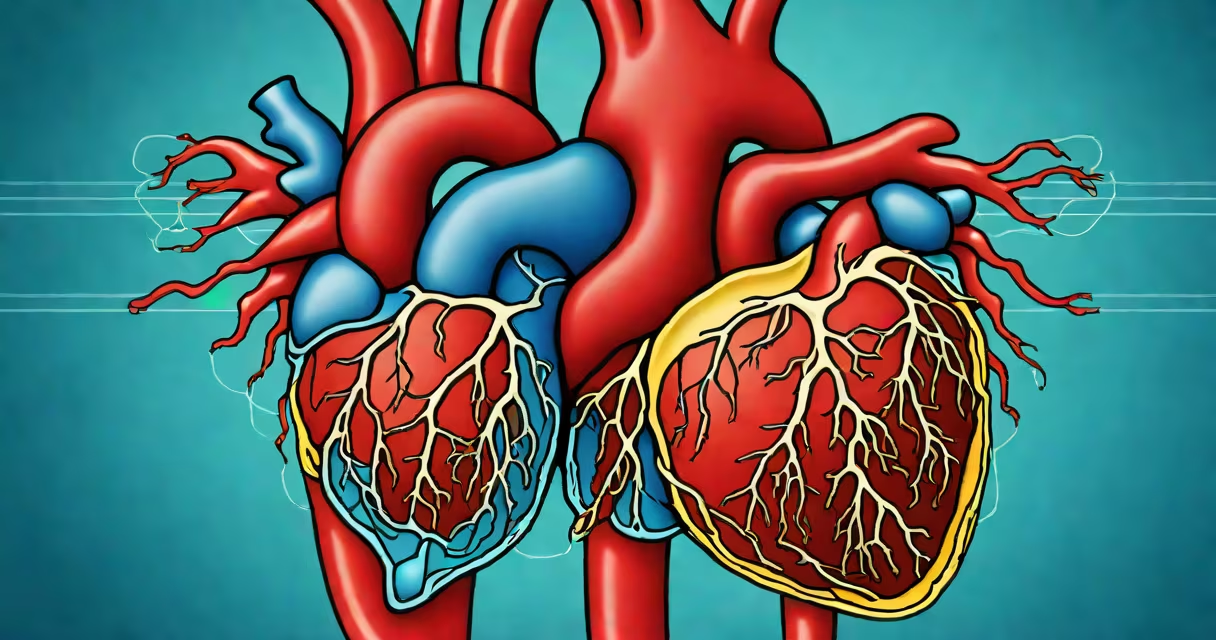
Aortic valve regurgitation is a heart condition where the aortic valve doesn't close properly, allowing blood to leak backward into the left ventricle during diastole. This backward flow forces the heart to work harder, potentially leading to heart failure over time.
The aortic valve controls blood flow from the left ventricle to the aorta. During systole, it opens to allow blood to exit the heart. During diastole, it closes to prevent backflow. In regurgitation, the valve doesn't seal completely, causing blood to leak backward. This extra volume stretches the left ventricle, reducing its efficiency. Over time, the heart muscle thickens and weakens, increasing the risk of heart failure.
Aortic valve regurgitation falls into two categories:
Common causes include:
Risk factors include hypertension, connective tissue disorders, and rheumatic fever.
Symptoms vary by severity and onset:
Diagnosis involves physical exams, echocardiograms, and electrocardiograms. Echocardiograms visualize the valve's structure and function, while electrocardiograms detect abnormal heart rhythms.
Treatment depends on severity and symptoms:
Lifestyle changes, such as reducing salt intake and exercising regularly, can help manage symptoms.
Many confuse aortic valve regurgitation with aortic stenosis, another valve disorder. While both affect the aortic valve, regurgitation involves leakage, whereas stenosis involves narrowing. Each requires different treatments.
Another misconception is that regurgitation only affects older adults. While age is a risk factor, it can occur at any age due to congenital defects or infections.