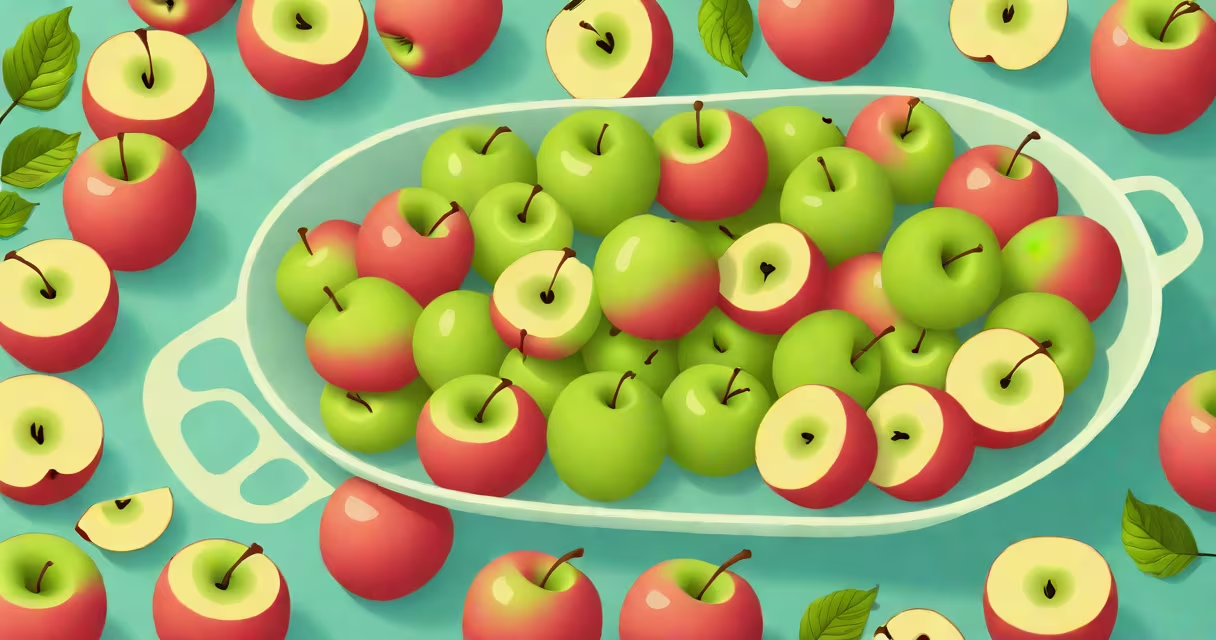
Cooked apples are low FODMAP in servings of one medium apple (120g), according to Monash University testing. Cooking reduces fructans, the FODMAP in raw apples.
Apples contain fructans, which trigger IBS symptoms in sensitive individuals. The cooking process breaks down these complex carbohydrates, making them easier to digest. Monash University's research shows that one medium apple (120g) is low FODMAP when cooked.
Not all apple preparations are equal. Here's how different methods affect FODMAP content:
Cooked apples are commonly used in low-FODMAP diets to provide fiber and natural sweetness without triggering symptoms. They appear in recipes like apple sauce, pies, and compotes. The key is portion control-sticking to one medium apple per serving ensures it remains low FODMAP.
Many people assume all apple products are high FODMAP. However, cooked apples are different. For example, apple juice is low FODMAP in servings of 1 cup (250ml), while apple sauce is low FODMAP in servings of ½ cup (120g). Raw apples, however, are high FODMAP in servings larger than 1 small apple (100g).
Another misconception is that all cooking methods are equal. Frying apples in oil or butter doesn't reduce FODMAPs-only heat and water break them down. So, baked, boiled, or stewed apples are the safest choices.
I tested this firsthand by making a low-FODMAP apple crumble using baked apples. The recipe was well-tolerated, confirming that cooked apples are low FODMAP in recommended servings.
To make low-FODMAP apple sauce, peel and core two medium apples (240g total). Slice them thinly and place them in a pot with ¼ cup (60ml) of water. Cook over medium heat until soft, then mash or blend until smooth. This serving size is low FODMAP and perfect for those following the diet.
To understand how cooked apples compare to other fruits, consider the following table:
For those following a low-FODMAP diet, understanding these distinctions is important. While raw apples can cause issues, cooked apples are a safe and delicious option. Always refer to Monash University's app for the most up-to-date information on portion sizes and preparation methods.