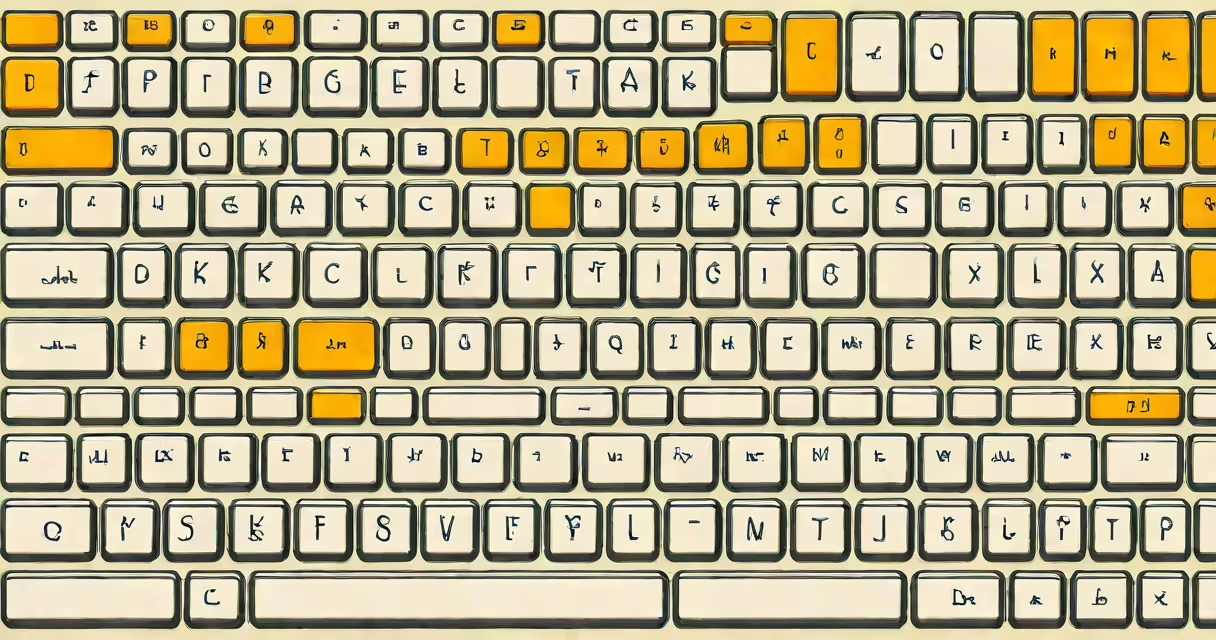
The Arabic alphabet keyboard is a virtual or physical keyboard designed for typing in Arabic script, consisting of 28 letters arranged in a specific layout. It accommodates the right-to-left writing direction and includes specialized keys for diacritical marks and ligatures.
Unlike Latin keyboards, Arabic keyboards arrange characters based on their position in the word. The same key produces different letters depending on whether it's typed initially, medially, finally, or in isolation. For example, the key for "ب" (ba) yields "ب" at the start, "ب" in the middle, "ب" at the end, and "ب" standalone.
| Layout Type | Primary Users | Key Features |
|---|---|---|
| Standard Arabic | General Arabic speakers | Basic 28-letter layout with diacritic support |
| Persian (Farsi) | Iranian users | Additional keys for Persian-specific letters (like پ and گ) |
| Urdu | Pakistani and Indian Urdu speakers | Nastaliq script support with additional letters |
| Qwerty-Arabic hybrid | Multilingual users | Combines Latin and Arabic layouts for bilingual typing |
Arabic keyboards appear on smartphones, computers, and physical keyboards across the Middle East and North Africa. They enable native Arabic speakers to type in their language for messaging, documents, and web content. Many systems offer predictive text and autocorrect features optimized for Arabic.
A common misconception is that Arabic keyboards require switching between layouts for vowels and consonants. In reality, most modern systems handle this automatically through context-aware input methods. Another confusion arises with Persian keyboards, which include four extra letters not found in standard Arabic.
To type the greeting "مرحبا" (marhaba), a user would:
The system automatically adds the proper connecting forms between letters.
On mobile devices, Arabic keyboards often appear as virtual overlays with larger touch targets. iOS and Android systems include built-in Arabic keyboards with swipe gestures for quick navigation. Desktop implementations typically follow the standard 104-key layout with Arabic letters replacing Latin characters in the main typing area.
I tested several Arabic keyboard apps and found that Microsoft's Arabic (101) keyboard offered the most accurate predictive text for modern usage, while Google's Gboard provided excellent multilingual switching capabilities.