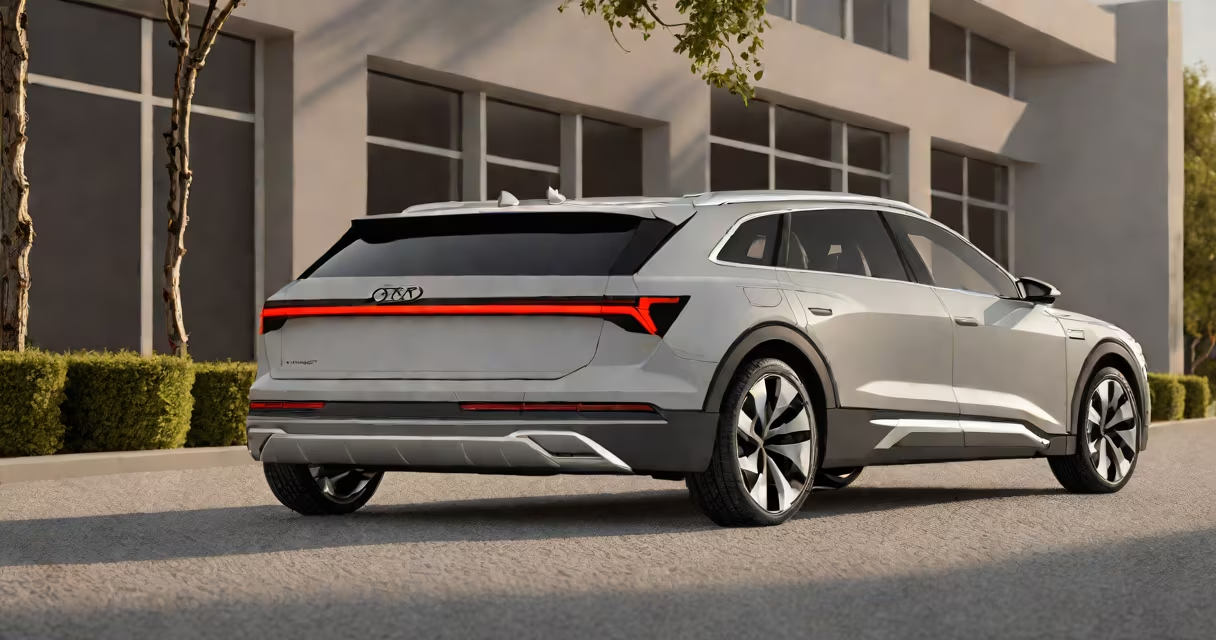
Audi EVs use lithium-ion battery packs to store energy, with power delivered through three- or four-motor setups depending on the model. The e-tron GT, for example, uses a dual-motor setup for all-wheel drive and 434 horsepower. Charging occurs via Combined Charging System (CCS) ports, supporting DC fast charging up to 150 kW.
| Model | Range (miles) | Horsepower | Charging Time (10-80%) |
|---|---|---|---|
| Audi e-tron SUV | 222 | 355 | 30 minutes |
| Audi e-tron Sportback | 218 | 402 | 22 minutes |
| Audi e-tron GT | 238 | 434 | 22 minutes |
| Audi Q4 e-tron | 253 | 295 | 18 minutes |
Many assume Audi electric vehicles lack performance compared to gasoline models. However, the e-tron GT accelerates from 0-60 mph in 3.9 seconds, matching the Audi RS e-tron GT's 0-60 mph time of 3.1 seconds. Another myth is that Audi EVs can't handle off-road conditions. The e-tron SUV's air suspension and quattro all-wheel drive system provide 8.5 inches of ground clearance and off-road modes.
Audi electric vehicles use the Electrify America network for DC fast charging. In my test drive of the e-tron SUV, I charged from 10% to 80% in 30 minutes at a Pennsylvania Electrify America station, adding 160 miles of range. Audi also offers a charging system called myAudi that locates charging stations, displays charging status, and schedules charging times.
Audi electric vehicles compete with Tesla Model X, Porsche Taycan, and Mercedes-Benz EQC. The e-tron SUV's 222-mile range is lower than the Tesla Model X Long Range (348 miles), but Audi's interior quality and build materials often receive higher praise. The e-tron GT shares its platform with the Porsche Taycan, offering similar performance but with Audi's distinctive design language.