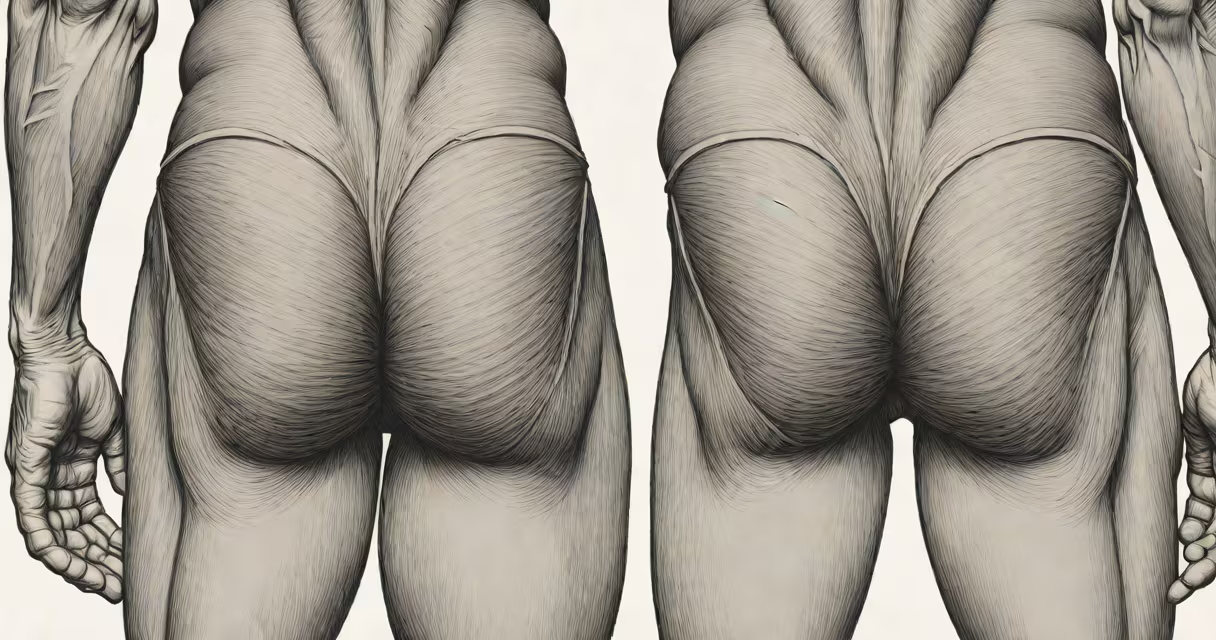
Back and glute muscles form the posterior chain, a group of muscles running along the back of the body that support posture, enable movement, and generate power. These muscles include the latissimus dorsi, trapezius, rhomboids, and the three gluteal muscles: gluteus maximus, medius, and minimus.
The back and glute muscles work together to stabilize the spine, extend the hips, and move the arms and legs. For example, the gluteus maximus is the largest muscle in the human body and is responsible for extending the hip, such as when standing up from a seated position. The latissimus dorsi, located in the lower back, helps with extension, adduction, and rotation of the shoulder joint.
| Muscle | Primary Function | Location |
|---|---|---|
| Gluteus Maximus | Hip extension, external rotation | Upper buttocks |
| Gluteus Medius | Abduction, internal/external rotation | Upper outer buttocks |
| Gluteus Minimus | Stabilization, internal rotation | Deep within the glutes |
| Latissimus Dorsi | Shoulder extension, adduction | Lower back |
| Trapezius | Shoulder elevation, scapular movement | Upper back and neck |
Many people believe that the glutes are primarily for appearance, but they play a important role in body mechanics. Another misconception is that sitting all day doesn't affect these muscles, but prolonged sitting can weaken the glutes and lead to imbalances. According to the American Council on Exercise, weak glutes can contribute to knee pain and lower back issues.
I once worked with a client who had chronic lower back pain. After assessing their posture and movement patterns, we focused on strengthening their glute muscles through targeted exercises. Within a few weeks, their pain decreased, demonstrating the importance of these muscles in maintaining a healthy back.
People often confuse the back and glute muscles with the muscles in chest and back, particularly the pectorals and deltoids. While both groups are essential for upper body strength, they serve different functions. The pectorals and deltoids are primarily responsible for movements of the arms and shoulders, whereas the back and glute muscles focus on posture, hip movement, and stabilizing the spine.