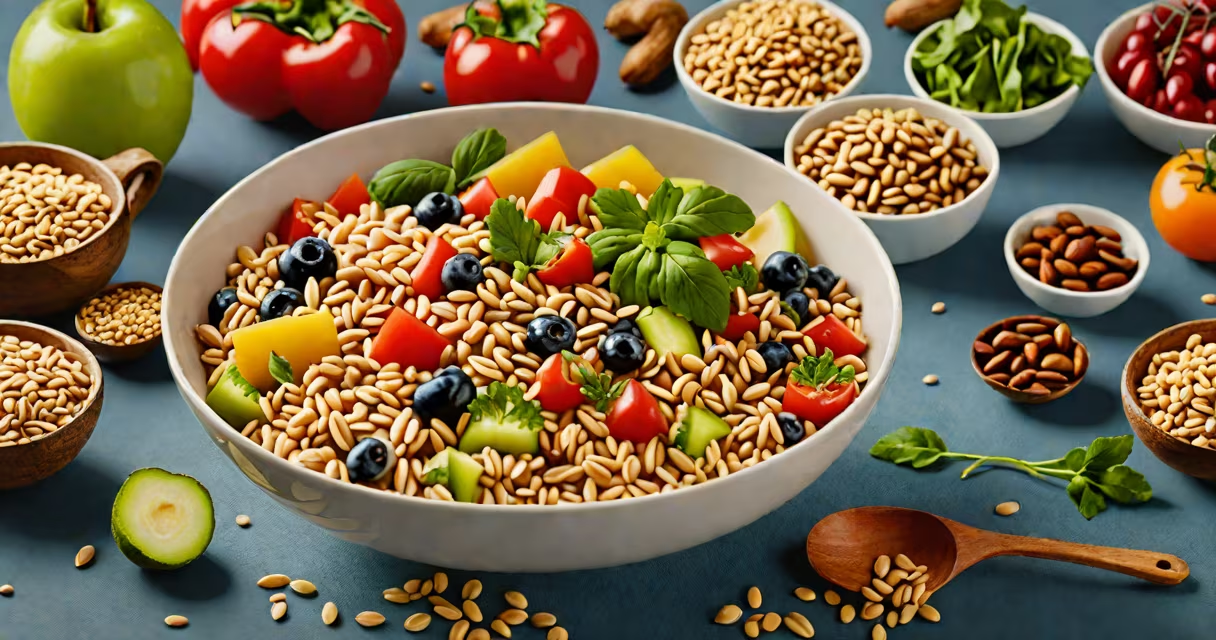
Soluble and insoluble fiber promote digestive health, feed beneficial gut bacteria, and reduce inflammation.
Fiber passes through the stomach and small intestine mostly undigested. Soluble fiber dissolves in water, forming a gel-like substance that slows digestion and feeds beneficial gut bacteria. Insoluble fiber adds bulk to stool, helping food pass through the digestive system more quickly.
According to the Mayo Clinic, fiber helps prevent and relieve constipation. It also helps maintain a healthy weight by making you feel full longer. The Harvard T.H. Chan School of Public Health notes that fiber-rich diets are linked to lower risks of heart disease, diabetes, and certain cancers.
| Type | Examples | Key Benefits |
|---|---|---|
| Soluble fiber | Oats, beans, apples, citrus fruits | Lowers cholesterol, stabilizes blood sugar |
| Insoluble fiber | Whole grains, nuts, seeds, vegetables | Prevents constipation, promotes regularity |
| Prebiotic fiber | Garlic, onions, bananas, asparagus | Feeds beneficial gut bacteria |
Many people think fiber is only about relieving constipation. However, it is important for maintaining a healthy gut microbiome. The gut microbiome consists of trillions of microorganisms living in the intestines. These microbes help digest food, produce vitamins, and protect against harmful pathogens.
Another misconception is that all fibers are the same. As shown in the table above, different types of fiber have unique benefits. For example, soluble fiber helps lower cholesterol levels, while insoluble fiber aids in preventing constipation.
To improve gut health, aim for at least 25-30 grams of fiber per day. Start with small changes, such as adding a tablespoon of chia seeds to your morning smoothie or swapping white rice for brown rice. Gradually increase your fiber intake to avoid bloating and gas.
For a fully worked example, consider a typical breakfast: swap sugary cereal for a bowl of oatmeal topped with berries and flaxseeds. This simple change can add around 8 grams of fiber to your daily intake.