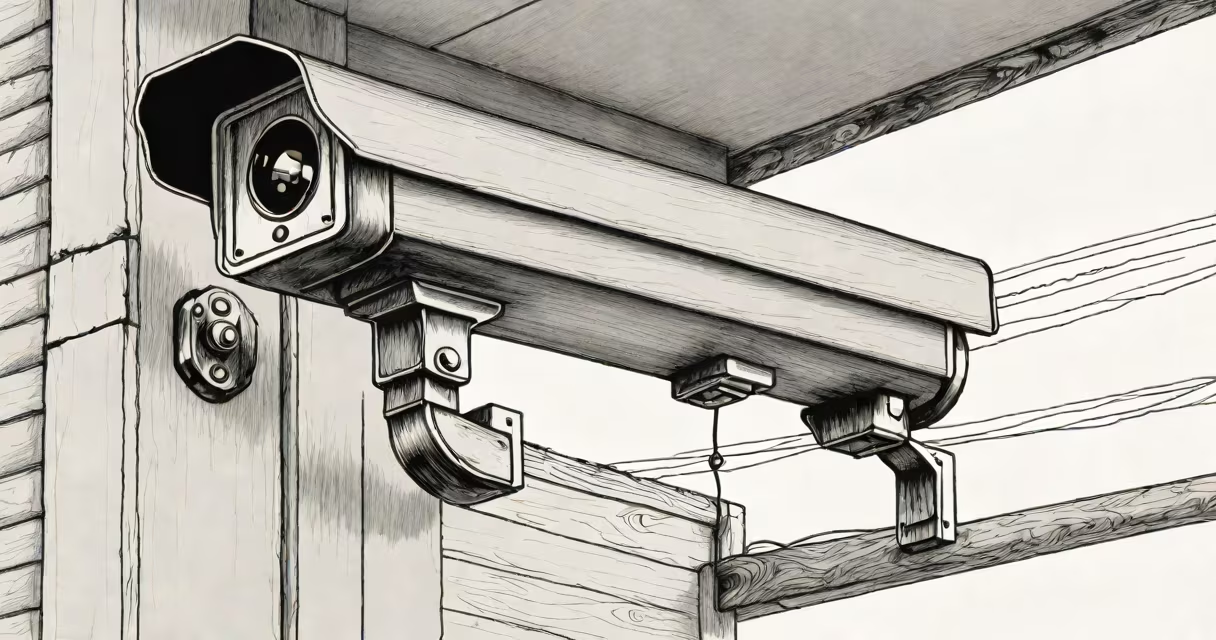
The best hardwired security cameras are permanently connected to power and recording systems via cables, providing consistent video quality and minimal interference. These systems are ideal for high-stakes surveillance where reliability is critical.
Hardwired cameras connect directly to a power source and a recording device through Ethernet cables. This setup ensures stable power delivery and uninterrupted video transmission. Many modern systems use Power over Ethernet (PoE), which sends both power and data through a single cable, simplifying installation.
| Type | Key Features | Best For |
|---|---|---|
| Bullet Cameras | Long-range, weatherproof, visible deterrent | Exterior monitoring |
| Dome Cameras | Wide-angle view, tamper-resistant, indoor/outdoor | Interior spaces, retail environments |
| Turret Cameras | 360-degree coverage, low-profile, vandal-proof | High-traffic areas, offices |
| Box Cameras | Modular design, interchangeable lenses, high resolution | Custom installations, professional surveillance |
Hardwired security cameras are common in commercial properties, government buildings, and high-security residential areas. Their reliability makes them ideal for environments where continuous monitoring is essential. Unlike wireless cameras, they aren't susceptible to signal interference from other devices.
According to a 2023 study by Security Sales & Integration, 68% of professional installers prefer hardwired systems for their dependability in critical applications. However, they require professional installation due to the need for cable routing and power management.
Many people assume hardwired cameras are outdated or less flexible than wireless models. In reality, modern hardwired systems offer advanced features like remote access, cloud storage, and AI-based analytics. The primary trade-off is the initial installation complexity.
One misconception is that hardwired cameras can't be moved easily. While relocating them requires more effort than wireless models, many systems allow for future expansion by adding more cameras to the existing network.
Consider a small business owner installing a security system in a retail store. They choose a hardwired setup with four dome cameras covering the interior and two bullet cameras monitoring the exterior. The system uses PoE, connecting all cameras to a network video recorder (NVR) through Ethernet cables. This setup provides continuous, high-quality footage with minimal maintenance requirements.
When setting up a hardwired system for a client's warehouse, I encountered challenges with cable routing through concrete walls. By planning the layout in advance and using conduit for protection, we avoided signal interference and ensured easy access for future maintenance. The system's reliability far outweighed the initial installation effort.