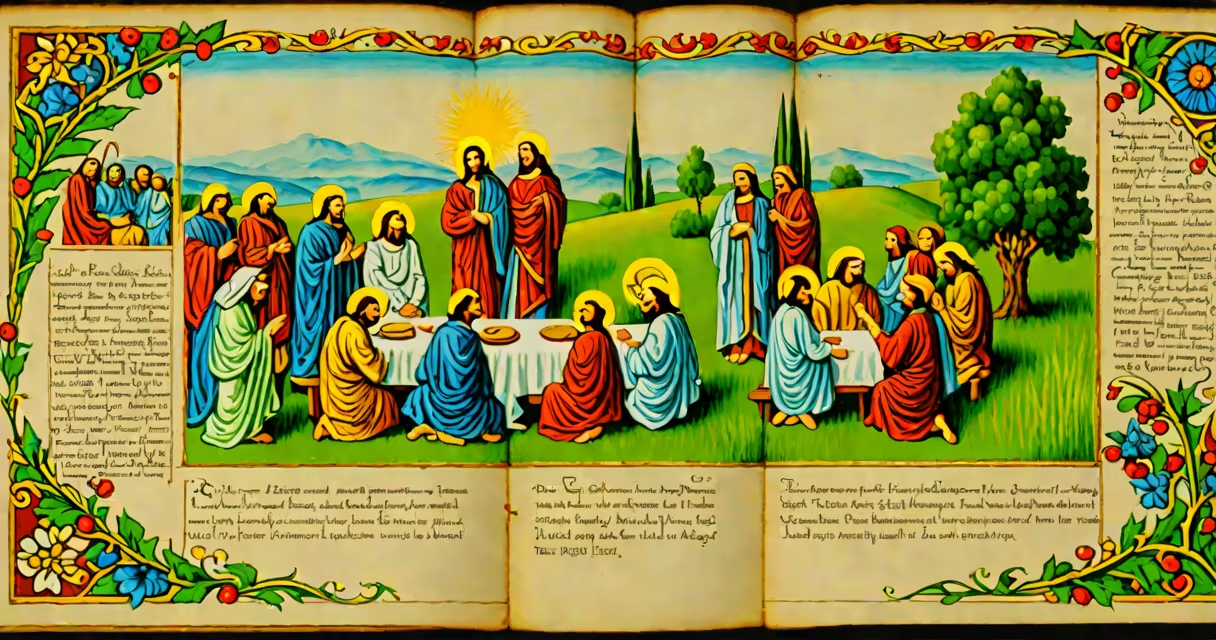
The biblical definition of beatitudes refers to the eight blessings Jesus taught in the Sermon on the Mount (Matthew 5:3-10), each beginning with "Blessed are..." These teachings outline the qualities that lead to spiritual happiness and divine favor.
The word "beatitude" comes from the Latin word "beatus," meaning "blessed" or "happy." In the Bible, the beatitudes are part of Jesus' most famous sermon, delivered to his disciples and a large crowd gathered on a hillside. They describe the character of those who are truly blessed according to God's standards, often contrasting with worldly values.
Each beatitude pairs a virtue with a promise. For example, "Blessed are the poor in spirit" doesn't mean material poverty but a recognition of spiritual need. This humility opens the door to receiving God's kingdom. Similarly, "Blessed are the peacemakers" highlights that those who actively pursue reconciliation reflect God's nature and are recognized as his children.
A common misconception is that the beatitudes promise immediate happiness. Instead, they offer long-term spiritual fulfillment and divine rewards, often in contrast to temporary worldly gains. The beatitudes challenge followers to live counterculturally, valuing humility, mercy, and purity over power, wealth, and status.
The beatitudes serve as a foundational teaching for Christian ethics and discipleship. They define what it means to follow Jesus and live a life pleasing to God. Historically, they have inspired movements like the Franciscans, who emphasized poverty and service. The beatitudes also address real human experiences-mourning, persecution-and promise divine comfort and justice.
Consider "Blessed are the peacemakers." In a conflict, a peacemaker doesn't avoid the issue or take sides but actively seeks reconciliation. This might look like mediating a family dispute or advocating for justice in an unfair situation. The promise is that such actions reflect God's character and result in being recognized as his child.
Some assume the beatitudes are passive or only spiritual. However, they call for active virtues like peacemaking and righteousness. Others confuse them with prosperity teachings, but the rewards are spiritual, not material. For instance, "Blessed are the poor in spirit" isn't about material poverty but spiritual humility.
According to Bible scholar N.T. Wright, the beatitudes are "not just about individual piety but about a community living out God's kingdom values." This communal aspect is often overlooked but is central to their purpose.
The biblical definition of beatitudes outlines the virtues and promises that define a life blessed by God. They challenge followers to live counterculturally, valuing humility, mercy, and purity. Understanding and applying the beatitudes leads to deeper spiritual fulfillment and reflects God's kingdom on earth.