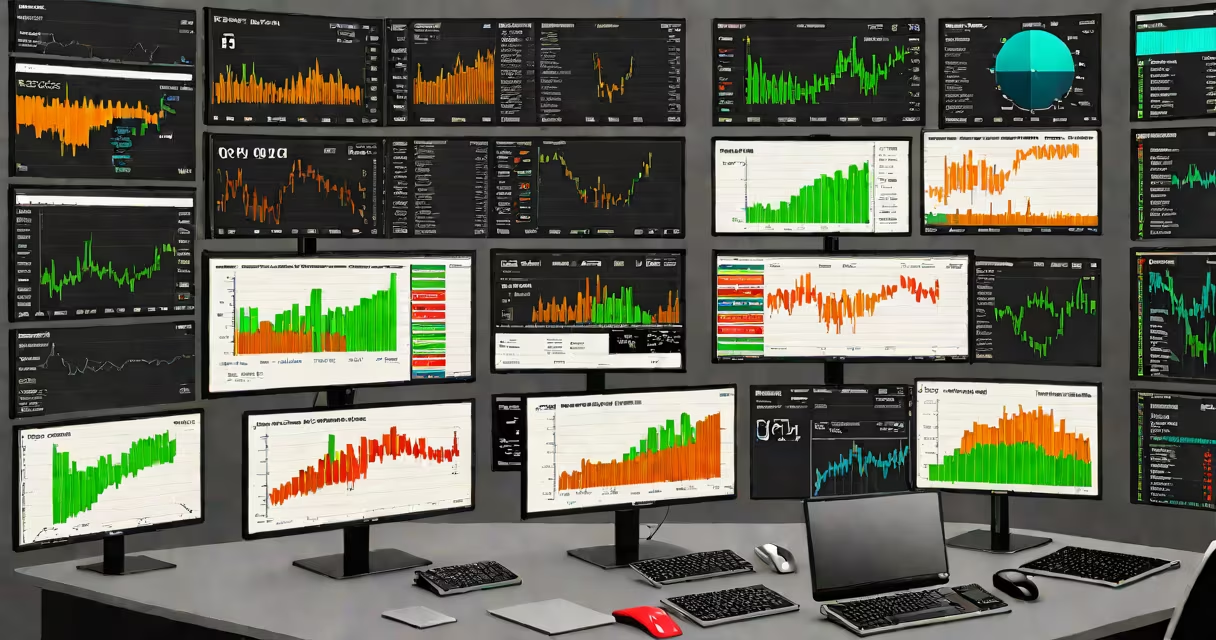
Bloomberg commodities markets refer to the real-time data, news, and analytics Bloomberg provides about global trade in raw materials like oil, gold, and agricultural products. These tools help traders monitor prices, track trends, and execute transactions efficiently.
Commodities markets involve buying and selling undifferentiated goods like crude oil, wheat, or copper. Unlike stocks, which represent ownership in companies, commodities represent physical goods or contracts for future delivery. Bloomberg's platform aggregates data from exchanges worldwide, offering a centralized hub for market participants.
Bloomberg's system collects data from major exchanges like the Chicago Mercantile Exchange (CME) and the Intercontinental Exchange (ICE). It displays current prices, historical trends, and trading volumes. For example, a trader monitoring Brent crude oil can see real-time price fluctuations alongside relevant news events, such as OPEC production decisions.
The platform also provides analytical tools. Traders can compare correlations between different commodities, analyze seasonal price patterns, or simulate how geopolitical events might impact markets. Bloomberg's algorithms identify trends, such as when soybean prices might rise due to drought conditions in key growing regions.
| Category | Examples | Key Exchanges |
|---|---|---|
| Energy | Crude oil, natural gas, gasoline | NYMEX, ICE |
| Metals | Gold, silver, copper, aluminum | COMEX, LME |
| Agriculture | Corn, wheat, soybeans, coffee | CBOT, Euronext |
| Livestock | Lean hogs, live cattle | CME |
Bloomberg's platform offers speed and accuracy. A trader managing a portfolio of energy futures can set price alerts, execute trades directly through the system, and access research reports. The platform's global reach ensures access to markets that might otherwise require separate subscriptions or direct exchange memberships.
Many traders rely on Bloomberg's news feed to stay informed about factors affecting commodity prices. For instance, a sudden drop in copper prices might correlate with a Bloomberg News report about new mining discoveries. The platform's integration of data and news helps traders make faster, better-informed decisions.
Some assume commodities trading is purely speculative. While futures contracts allow traders to bet on price movements, many participants use these markets to hedge against price risks. For example, an airline might buy jet fuel futures to lock in prices and protect against volatility.
Another misconception is that commodities markets are limited to physical goods. While some traders deal in physical commodities, most activity involves financial instruments like futures contracts or exchange-traded funds (ETFs). These tools allow traders to gain exposure without handling physical goods.
Access requires a Bloomberg Terminal subscription, which provides full functionality. Users can input commodity symbols (like "CL" for crude oil) to view detailed charts, trade histories, and related news. The terminal's customizable interface lets traders create personalized dashboards focusing on specific markets or strategies.
For those new to commodities trading, learning to interpret Bloomberg's data is important. The platform offers training programs and tutorials to help users go through its features effectively. Understanding how to read commodity price charts and analyze trading volumes can improve decision-making.
While Bloomberg is a useful tool, it's not the only resource for commodities traders. Many combine Bloomberg's data with insights from other platforms or proprietary research. However, Bloomberg's complete coverage and real-time updates make it an indispensable resource for professionals in the field.
To learn more about investing in commodities, see our guide on how to invest in commodities.