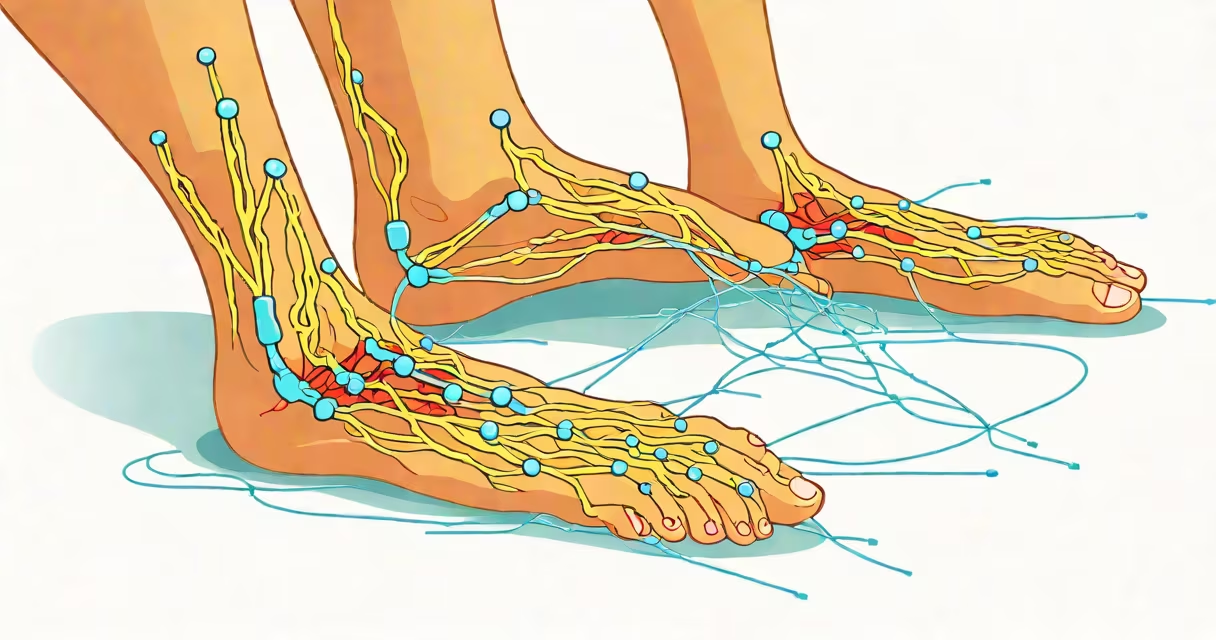
Bottom of feet pins and needles describes a tingling, prickling, or numb sensation often caused by temporary pressure on nerves or underlying conditions. This sensation occurs when nerves misfire, sending incorrect signals to the brain.
How It Works
The sensation happens due to compression or irritation of peripheral nerves. Nerves transmit signals between the brain and body parts. When compressed, they send mixed signals, creating tingling or numbness. Temporary pressure, like sitting cross-legged, can cause this. Persistent sensations may indicate nerve damage or circulation issues.
Main Causes
Common causes include:
Poor Circulation: Conditions like diabetes or peripheral artery disease reduce blood flow, causing tingling.
Nerve Compression: Pressure on nerves, such as from tight shoes or prolonged standing, leads to temporary tingling.
Vitamin Deficiencies: Low levels of B vitamins, particularly B12, can cause nerve damage and tingling.
Peripheral Neuropathy: Chronic nerve damage from diabetes or other conditions results in ongoing sensations.
When to Seek Medical Advice
Consult a doctor if:
Sensations persist beyond a few hours.
Accompanied by weakness, loss of coordination, or muscle wasting.
Symptoms worsen or spread to other areas.
Persistent or severe symptoms may indicate underlying conditions requiring treatment.
Treatment Options
Treatments depend on the cause. For temporary sensations, adjust posture or footwear. For chronic issues, doctors may recommend:
Medications: Pain relievers, antidepressants, or anti-seizure drugs to manage nerve pain.
Physical Therapy: Exercises to improve circulation and nerve function.
Lifestyle Changes: Managing diabetes, quitting smoking, or improving diet to address deficiencies.
For persistent or severe cases, consult a healthcare provider to identify and treat the underlying cause. Early intervention can prevent further nerve damage and improve outcomes.