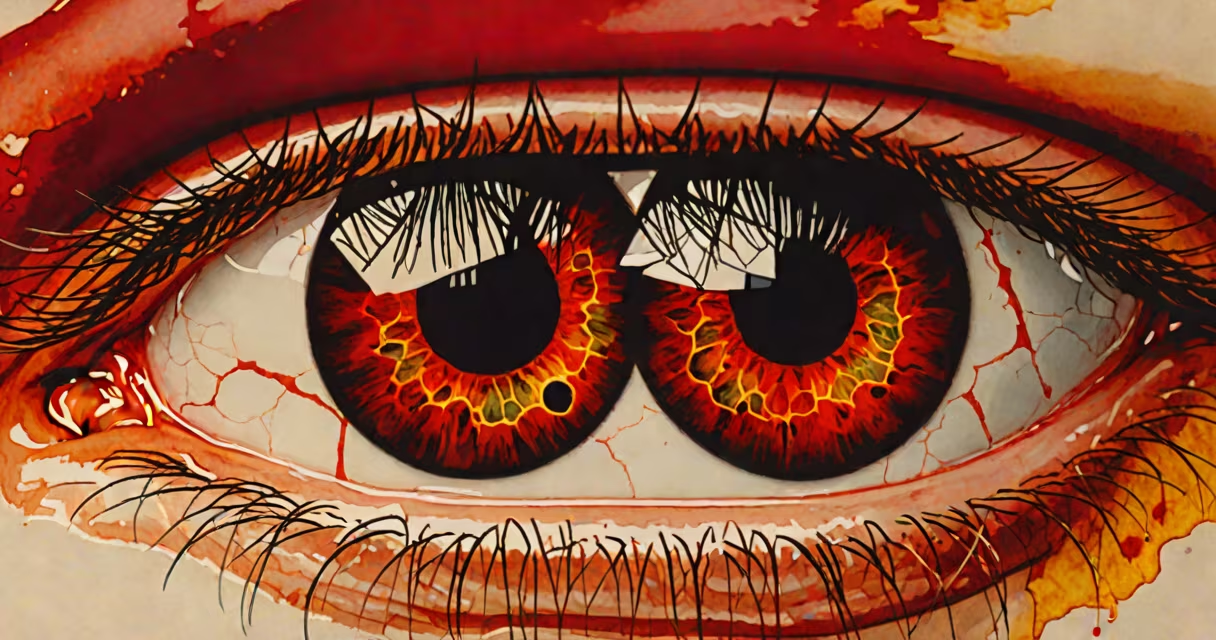
Redness at the bottom of the eyeball typically results from burst blood vessels, irritation, or inflammation. While often harmless, persistent or severe redness may signal underlying conditions needing medical evaluation.
The white part of the eye, or sclera, contains tiny blood vessels that can dilate or rupture due to strain, injury, or infection. When these vessels become visible, they create a red appearance. The bottom of the eyeball often shows redness first because it's more prone to irritation from environmental factors like dust or dry air.
Redness at the bottom of the eyeball can stem from several sources:
Most cases of redness at the bottom of the eyeball resolve on their own within a few days. However, seek medical attention if:
According to the American Academy of Ophthalmology, persistent redness combined with other symptoms may require treatment for underlying conditions such as glaucoma or uveitis.
Many people confuse redness at the bottom of the eyeball with redness of the lower eyelid, which often stems from allergies or styes. Unlike eyelid redness, which may involve swelling or a visible bump, eyeball redness usually appears as diffuse redness without lumps.
Another mistake is assuming all redness is due to minor irritation. While subconjunctival hemorrhages are common and harmless, persistent redness without an obvious cause should be evaluated by an eye care professional.
To prevent redness at the bottom of the eyeball:
Treatment depends on the cause. For minor cases, rest and lubricating eye drops may suffice. More serious conditions, such as infections, may require antibiotics or anti-inflammatory medications prescribed by a doctor.
I once experienced a sudden red spot at the bottom of my eye after a vigorous sneeze. It turned out to be a subconjunctival hemorrhage, which resolved on its own within a few days. The experience reinforced the importance of being cautious with eye health, as minor incidents can sometimes lead to noticeable symptoms.