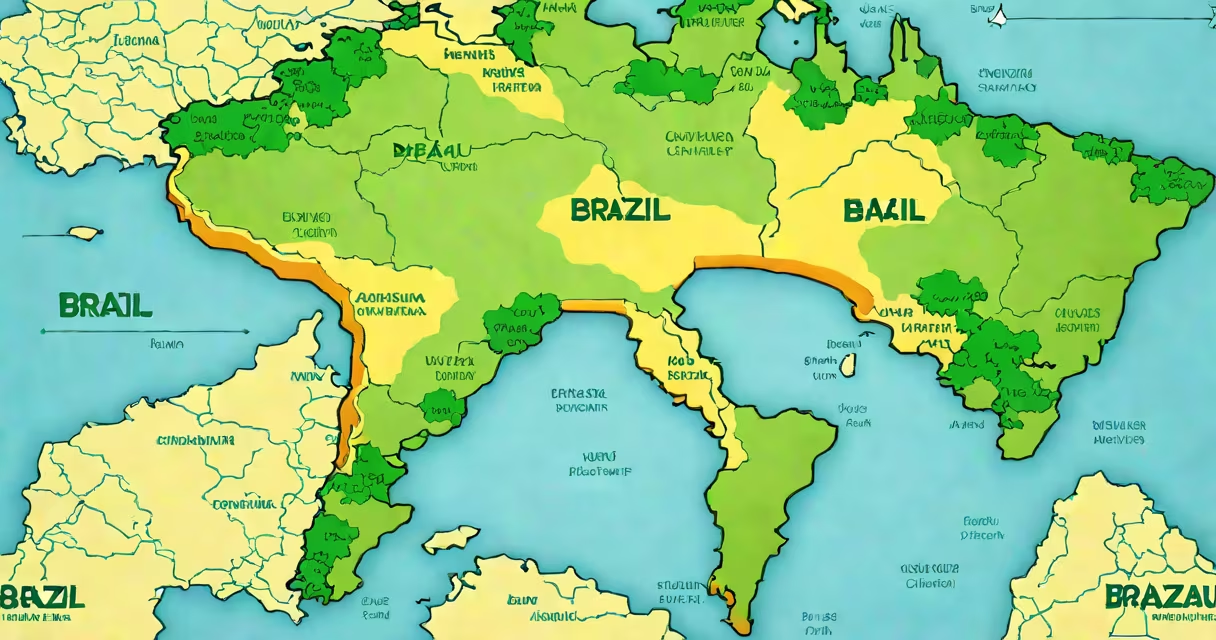
Brazil is located in South America, the fourth-largest continent by area and fifth by population. The country occupies nearly half of the continent's landmass.
Continents are large landmasses separated by oceans. Geographers debate whether Europe and Asia form a single continent (Eurasia) or are separate, but most recognize seven continents: Africa, Antarctica, Asia, Australia, Europe, North America, and South America.
Brazil shares borders with every other South American country except Chile and Ecuador. The Amazon River, the world's largest by discharge volume, flows through northern Brazil. The country's diverse landscapes include rainforests, savannas, wetlands, and coastal beaches.
Some confuse Brazil's location due to its large size and cultural influences. While Brazil has Portuguese heritage, it's not in Europe. Nor is it in Central America, which is a subregion of North America. Brazil's unique position makes it the only Portuguese-speaking country in the Americas.
Understanding Brazil's continental location helps contextualize its role in global affairs. As the largest economy in Latin America and a BRICS nation, Brazil's geographic position influences trade routes, environmental policies, and cultural exchanges. For example, the Amazon Rainforest spans nine countries, but Brazil holds about 60% of its area.
I once visited Brazil's northeastern coast and was struck by how the field differed from the Amazon basin. This diversity is a direct result of Brazil's vast size within South America.