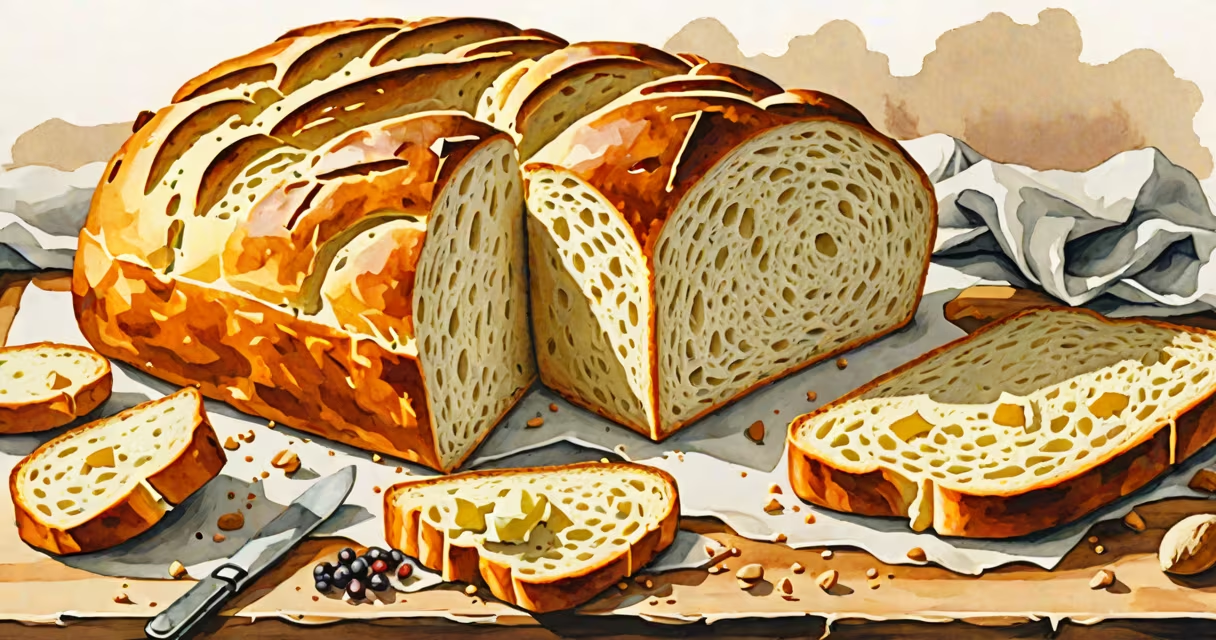
A bread dough recipe combines flour, water, yeast, and salt to create a fermented mixture that becomes light and airy when baked. The basic ratio is roughly 66% water to flour by weight, with about 1% yeast and 2% salt.
Yeast consumes sugars in the flour, producing carbon dioxide and alcohol. The gas creates bubbles in the dough, making it rise. Gluten proteins in the flour form a network during mixing, giving bread its structure.
The four core ingredients in most bread dough recipes serve specific purposes:
This simple recipe makes one 1.5-pound loaf:
3 1/4 cups (400g) bread flour
1 1/4 cups (300ml) warm water (105°F/40°C)
1 packet (2 1/4 tsp/7g) active dry yeast
1 1/2 tsp (9g) salt
1 tbsp (15ml) sugar or honey (optional)
Mix yeast with warm water and sugar. Let sit 5 minutes until foamy. Combine flour and salt in bowl. Add yeast mixture and mix until combined. Knead 10 minutes by hand or 5 minutes in stand mixer. First rise 1-2 hours until doubled. Shape, second rise 30-60 minutes, then bake at 450°F (230°C) for 25-30 minutes.
Many home bakers struggle with dough that doesn't rise properly. This usually happens because:
I've found that adding a small amount of olive oil (1-2 tablespoons) to the dough improves texture and keeps the crust soft. This technique works especially well for sandwich bread.
| Type | Key Characteristics | Typical Uses |
|---|---|---|
| Straight dough | Mixed all at once, single rise | Sandwich bread, rolls |
| Sponge and dough | Partial fermentation before final mix | Artisan breads, baguettes |
| Poolish | Pre-ferment with 100% hydration | French breads, sourdough |
| No-knead | Long fermentation, minimal mixing | Crusty artisan loaves |
Commercial bread often contains preservatives and dough conditioners that extend shelf life but affect flavor. Freshly baked bread has:
According to a 2019 study by the Journal of Agricultural and Food Chemistry, homemade bread contains higher levels of beneficial compounds like phenolic acids and flavonoids compared to commercial varieties.