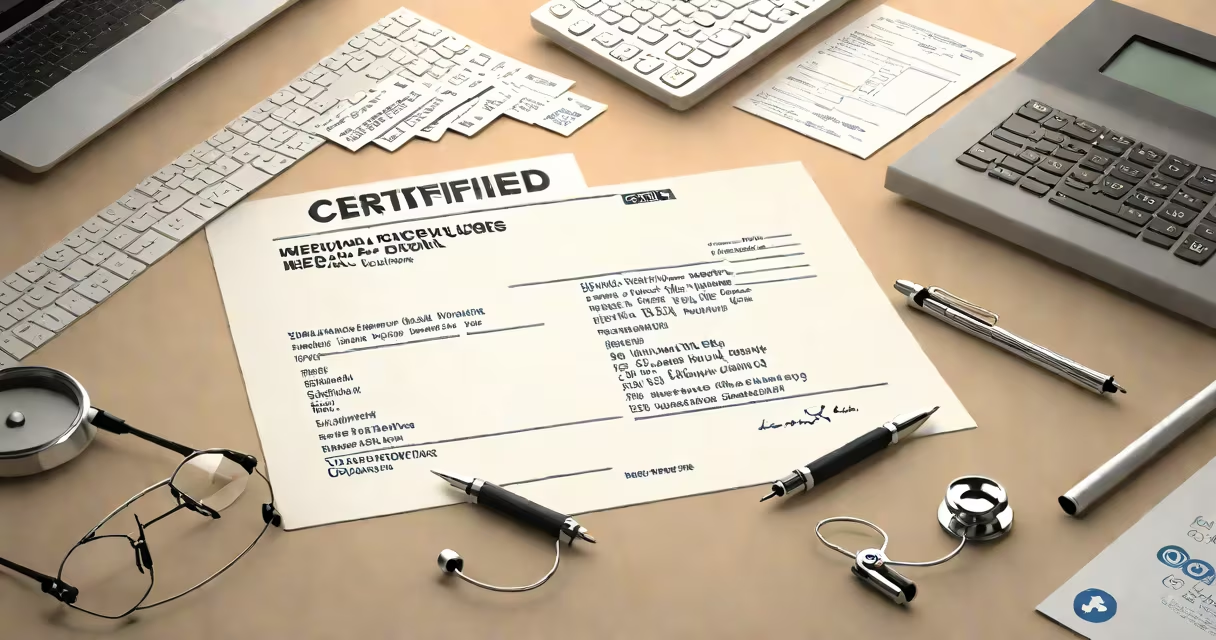
Certified Portuguese medical records translation converts Portuguese medical documents into English while meeting legal and ethical standards for patient care. The process guarantees accuracy through professional translators and notarized certification.
Healthcare providers submit Portuguese medical records to a certified translation service. The translator, fluent in both languages and familiar with medical terminology, renders the document accurately. A certifying officer then stamps and signs the translated document, affirming its fidelity to the original.
For example, a U.S. hospital requesting a patient's Portuguese medical history from Brazil would receive the records in Portuguese. The hospital sends these to a certified translator, who produces an English version. The translator includes a signed statement attesting to the translation's accuracy.
| Document Type | Translation Purpose |
|---|---|
| Patient records | Continuity of care for Portuguese-speaking patients |
| Prescriptions | Ensuring correct medication administration |
| Consent forms | Legal protection for healthcare providers |
| Diagnostic reports | Accurate treatment planning |
Certification ensures translations meet legal and ethical standards. Hospitals and clinics require certified translations to protect patient safety and comply with regulations like HIPAA. Without certification, translated documents may lack legal standing or accuracy.
A 2022 study by the American Medical Association found that uncertified translations contained an average of 12% errors, potentially leading to misdiagnosis or improper treatment. Certification reduces this risk by holding translators accountable.
Many assume any bilingual person can translate medical records. However, medical translation requires specialized training in anatomy, pharmacology, and healthcare systems. A certified translator understands these nuances and avoids costly mistakes.
Another myth is that machine translation suffices. While tools like Google Translate offer quick solutions, they lack the precision needed for legal or diagnostic documents. Human translators catch context-specific errors that software misses.
In 2023, a Florida clinic needed a Portuguese patient's medical history from Portugal. The original records, written in technical Portuguese, included terms unfamiliar to English-speaking doctors. A certified translator converted the documents, ensuring the clinic understood the patient's conditions and treatments. The certification allowed the clinic to proceed confidently with care.
For non-medical documents like diplomas, certification follows similar protocols but focuses on educational rather than healthcare terminology.