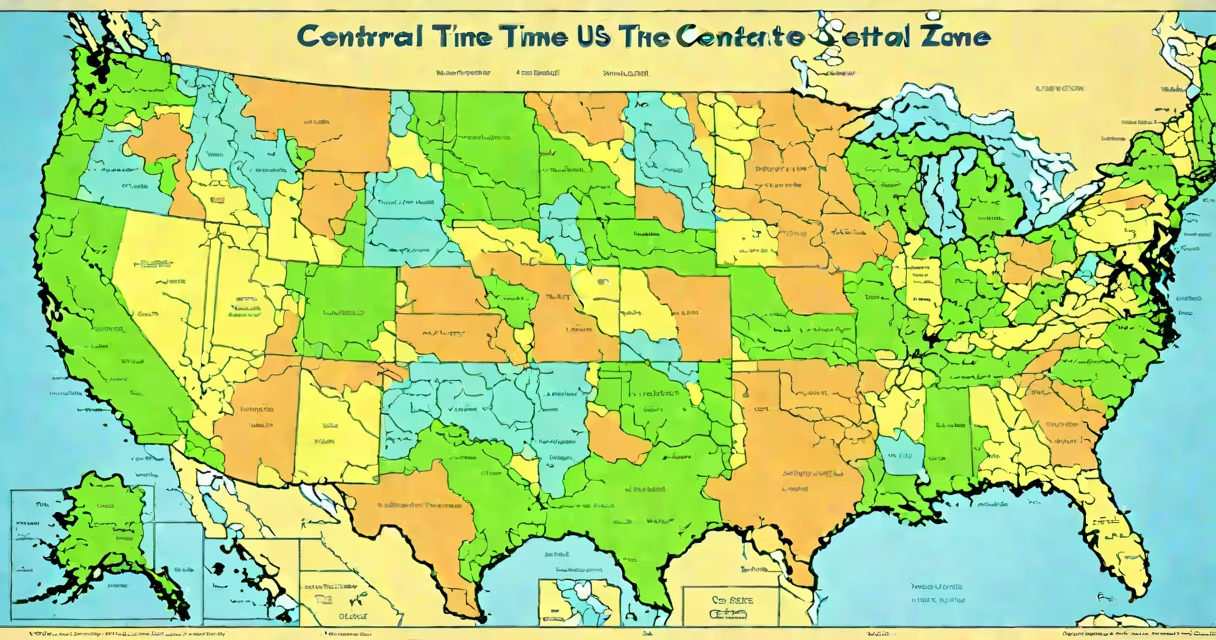
Central Time US is the time zone that spans nine states in the central United States, including Texas, Louisiana, and Illinois. It observes Central Standard Time (CST) or Central Daylight Time (CDT), depending on the season.
Central Time is six hours behind Coordinated Universal Time (UTC-6) during standard time and five hours behind (UTC-5) during daylight saving time. The switch between CST and CDT occurs on the second Sunday in March and the first Sunday in November, aligning with federal law.
The following states primarily observe Central Time:
Central Time is important for scheduling events, flights, and business operations across the central United States. It helps coordinate activities between different regions, especially in industries like transportation, healthcare, and finance. For instance, a flight departing from Chicago (Central Time) at 9 AM will arrive in New York (Eastern Time) at 10 AM, accounting for the one-hour difference.
Many people confuse Central Time with Eastern or Mountain Time. For example, someone might think that Dallas, Texas, is on Eastern Time because it's a major city, but Dallas actually observes Central Time. Another common mistake is assuming that all of Arizona follows Mountain Time, but most of the state observes Mountain Standard Time year-round.
Central Time plays a important role in coordinating activities across the central United States. By knowing the states that observe it and how it differs from other time zones, you can avoid scheduling conflicts and ensure smooth communication.