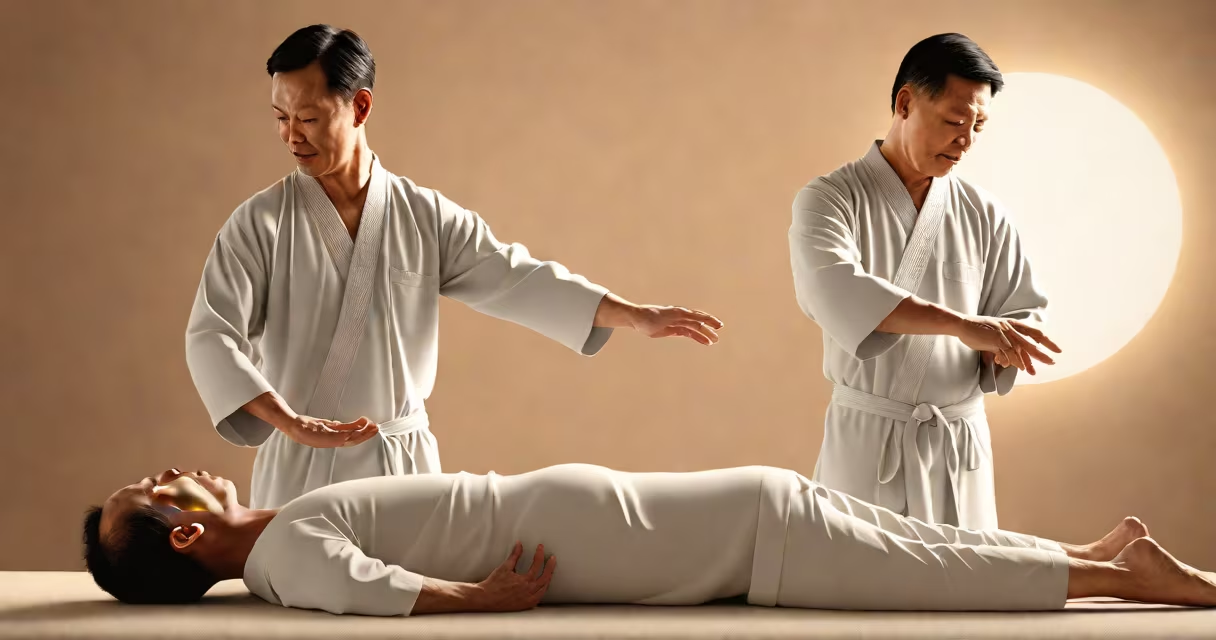
Chinese qigong massage is a traditional healing practice that combines gentle touch, breath control, and movement to balance energy flow, relieve pain, and promote relaxation. Practitioners use rhythmic pressing, stretching, and tapping techniques along acupuncture meridians to stimulate the body's natural healing abilities.
Qigong massage operates on the principle of qi (life energy) flowing through the body's meridians. By applying pressure to specific points and guiding the recipient through coordinated breathing and movements, practitioners aim to clear blockages and restore balance. A session typically lasts 30 to 60 minutes, with the practitioner using their hands, fingers, or elbows to apply varying degrees of pressure.
The practice incorporates several key techniques:
Unlike Western massage, which focuses primarily on muscles and connective tissue, qigong massage targets both the physical body and the subtle energy system. A common misconception is that it's solely about relaxation-while it does promote calmness, its primary goal is to harmonize qi circulation.
Practitioners use qigong massage to address various conditions, including chronic pain, stress, digestive issues, and insomnia. For example, research published in the Journal of Traditional Chinese Medicine found that qigong massage reduced lower back pain in study participants after eight weeks of treatment. Another study in the International Journal of Neuroscience showed improved sleep quality in patients with insomnia.
Chinese qigong massage differs from other therapies in several ways. Unlike Swedish massage, which primarily targets muscle relaxation, qigong massage integrates breathwork and movement to influence the body's energy pathways. It's also distinct from acupuncture, which uses needles to stimulate points, whereas qigong massage employs manual techniques. Some practitioners incorrectly assume it's purely spiritual-while it does incorporate mindfulness, its foundation lies in physiological and energetic principles.
I first experienced qigong massage during a trip to Beijing. The practitioner guided me through slow, deliberate movements while applying gentle pressure to my back and limbs. Unlike other massages I'd tried, this one left me feeling both deeply relaxed and energetically balanced-a unique combination I hadn't encountered before.
If you're interested in trying qigong massage, look for certified practitioners trained in traditional Chinese medicine. Sessions may be covered by insurance if prescribed for specific conditions. For those curious about related practices, exploring common Chinese phrases used in qigong therapy can provide additional cultural context.